
Almost everyone who calls us about black mold has spent an hour reading first, and most of what they found was written to frighten them. So before anything else: finding dark mold in your house is a normal household problem with a known fix. It is worth dealing with. It is not worth panicking over.
What people mean by "black mold"
Usually they mean Stachybotrys chartarum, which got a great deal of press in the 1990s and has been the center of mold anxiety ever since.
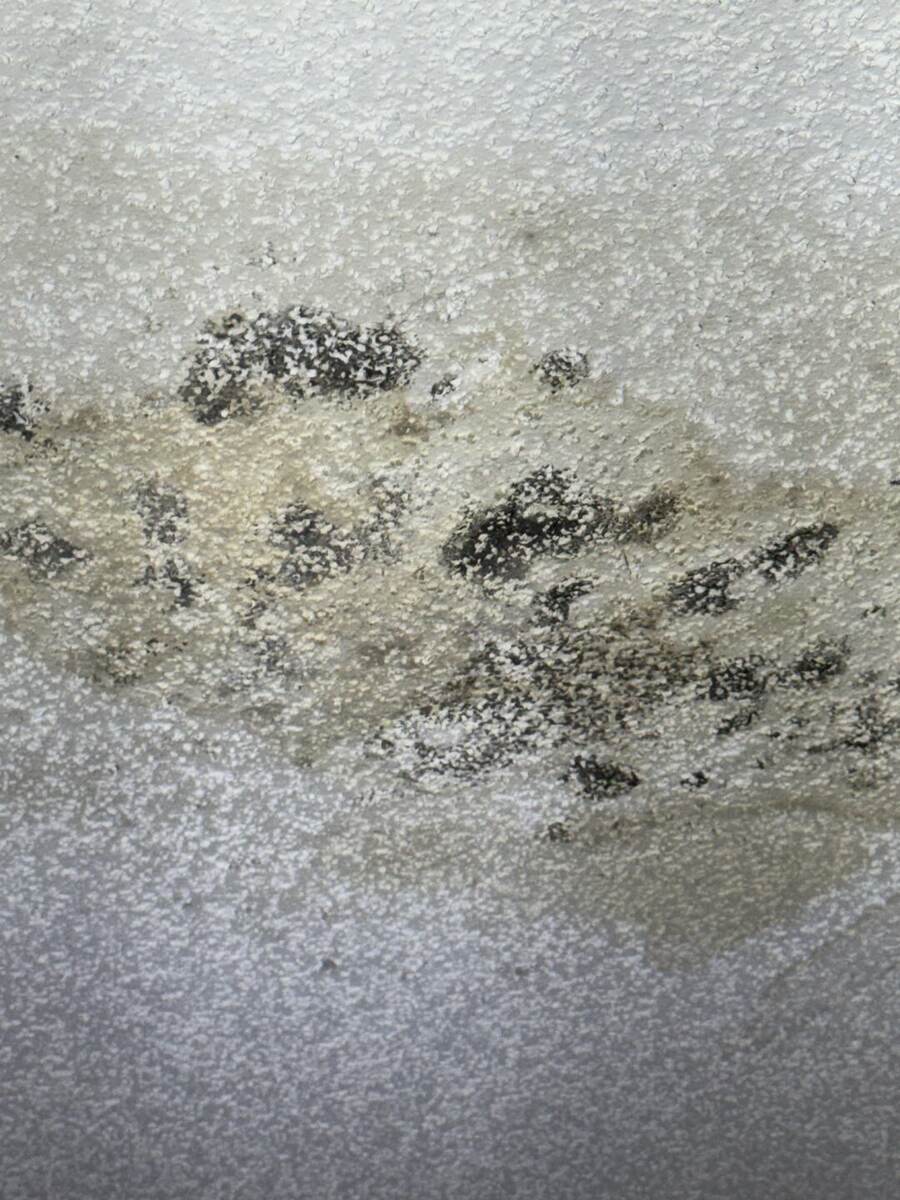
The difficulty is that a large number of common indoor molds appear black or very dark green, and several of them look essentially identical on a wall. Cladosporium is extremely common and often dark. So is Aspergillus niger. The dark speckling in a bathroom is far more often one of those than the one people are worried about.
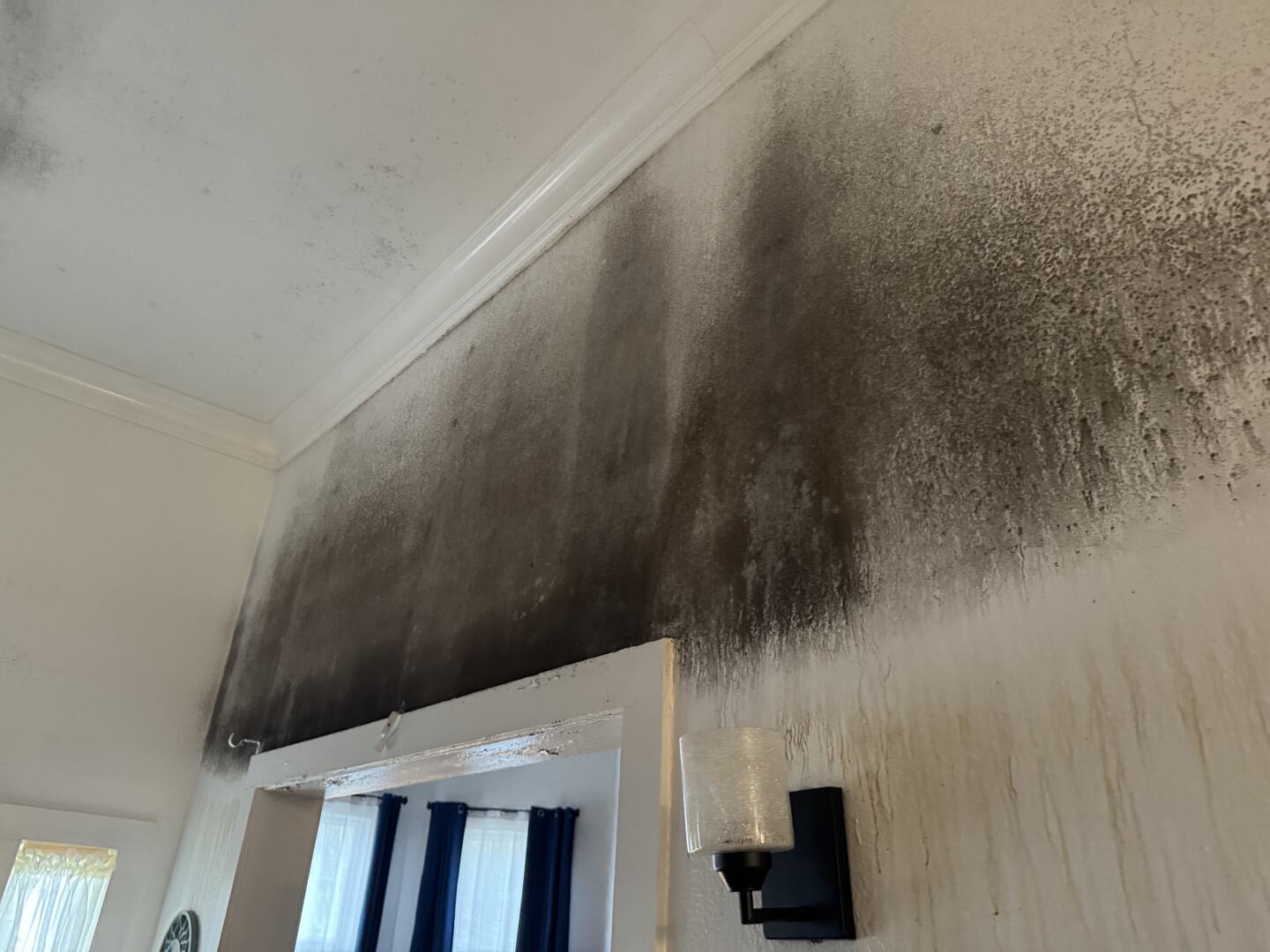
Nobody can identify a mold species by looking at it. Not you, not us, not a company that tells you on the phone that you have black mold. That requires a laboratory. Anyone who names a species from a photograph is guessing or selling.
Why the species usually does not change the work
This is the part that gets left out, and it is the practically useful part.
Before the detail: correcting the color myth is not the same as telling you not to worry. Any mold growing in your house is not a good thing and it needs to be fixed — what the species does not do is change how it gets fixed.
Remediation is decided by three things, and none of them is color:
| What decides the work | Why |
|---|---|
| How much there is | A patch on a windowsill and growth through a wall cavity are different jobs. Area and depth drive containment, removal and cost. |
| What it is growing on | Hard sealed surfaces can be cleaned. Porous materials — drywall, wood, trim, insulation — hold growth below the surface and generally have to come out. |
| Where the moisture came from | The one that decides whether it returns. Remove mold without fixing the water and you pay for the same job twice. |
Significant growth gets contained and removed the same way regardless of species. So paying to identify it rarely changes what happens next — which is why we would rather spend the visit finding the water.
On health — what we will and will not say
We remediate buildings. We are not doctors and we will not tell you what mold has or has not done to your health.
What can be said plainly: mold exposure affects people differently, and those with asthma, allergies or compromised immune systems are generally more sensitive to it. If someone in your house has symptoms you are concerned about, that is a conversation for a physician, not for a remediation contractor — and be wary of anyone in this trade who is willing to have it with you. We tell every customer the same thing: see a medical professional.
For scale, the American Academy of Allergy, Asthma & Immunology estimates that roughly 10 percent of people are sensitized to mold, and around 5 percent are predicted to have symptoms from it. Those are estimates, and “predicted” is doing real work in that sentence — but they are the honest order of magnitude, and they are a long way from the numbers this subject usually gets discussed with.
General health information, not medical advice. Source: American Academy of Allergy, Asthma & Immunology.
A note on how this gets sold
Black mold is the most fear-driven subject in this industry, and fear sells emergency response, unnecessary testing and inflated scopes.
The tactic to watch for is specific: “black mold” used as a fear lever. A company tells you over the phone that you have toxic black mold, leads with what it is going to do to your family, and quotes a large number before anyone has looked at it. The fear is the sales tool, and the scope that follows is sized to the fear rather than to the house.
What to ask a mold company before you hire one goes through this properly. That is a separate thing from whether your problem is big or small — we cannot tell you that from here, and anybody who can is guessing. What we can tell you is that finding out should not cost you anything, and with us it does not.
What removal actually involves
- Find the moisture first. Mold is a symptom. In South Louisiana the cause is often not a leak at all — it is an air conditioner cooling without dehumidifying, an attic running too hot, or a room that traps humid air. More on that here.
- Contain the area. Sealed off and held under negative air pressure, so disturbing growth does not distribute spores through the rest of the house. This is the step that separates remediation from cleaning, and skipping it is how one room becomes several.
- Remove what cannot be saved. Porous material with established growth comes out. Hard surfaces are cleaned.
- Treat what stays. Traditional remediation, or mold fogging where the growth is in spaces that cannot be opened up — which often means less demolition and a lower total repair bill.
- Correct the cause. Otherwise the rest was rented, not fixed.
What it costs
Our minimum is $600. Small projects generally run $1,000 to $2,500, medium $2,500 to $5,000, and larger jobs from $5,000. Most mold remediation in Louisiana lands between $1,000 and $5,000.
Dark mold is not priced differently. If a quote goes up because someone used the words "black mold," ask what specifically changed about the scope.
Two calculators, published price ranges, and no email address required to see the answer.
Can you remove it yourself?
A small patch on a hard sealed surface — tile, glass, a sealed countertop — wiped with detergent and water and then properly dried, yes. Then fix whatever made that spot wet, usually ventilation.
Do not use bleach. It removes the color so the surface looks clean while the growth continues underneath, and since bleach is mostly water it feeds that growth on porous material. On black mold specifically, bleaching is how people convince themselves a problem is solved. The full explanation is here.
Call someone when it is bigger than you are comfortable and properly equipped to handle — containment, protective equipment and the right supplies are what stop most people, not the size — when it is on drywall or wood rather than a hard surface, when it keeps returning, or when it is showing up in more than one room.
Common questions
How do I know if it is black mold?
You cannot tell by looking, and neither can a contractor. Many common indoor molds are black or very dark green and look alike on a wall. Identifying a species requires laboratory analysis. In practice it rarely changes the work, because remediation is decided by how much growth there is, what it is growing on, and where the moisture is coming from.
Is black mold more dangerous than other mold?
Mold affects people differently, and those with asthma, allergies or compromised immune systems are generally more sensitive. Health questions belong with a physician rather than a remediation contractor. What we can say about the building is that significant growth is treated the same way regardless of species.
Does black mold removal cost more?
It should not. Cost is driven by the area affected, the materials involved, how much has to be removed and whether the HVAC system is contaminated. If a quote increases because of the words "black mold," ask what specifically changed in the scope.
Can I remove black mold myself?
A small patch on a hard non-porous surface can be wiped with detergent and water and dried thoroughly, followed by correcting whatever made the area wet. Do not use bleach: it removes the color while growth continues underneath, and its water content feeds that growth in porous material. Larger areas, porous materials, recurring growth or mold in several rooms should be looked at properly.
Do I need testing before removal?
Usually not, if the growth is visible and the extent is clear, because identifying the species rarely changes the remediation. Testing is useful when growth is suspected but cannot be found, when a documented result is needed for a dispute or a sale, or to verify conditions afterwards. Louisiana licenses testing and remediation separately, so we refer testing to an independent company rather than performing it ourselves.
Will it come back?
Only if the moisture source remains. That is the single factor that determines recurrence, and it is why the water gets traced before anything is removed. If mold has returned to a spot that was previously cleaned or remediated, the cause was never found.