
Most people go looking for a leak. They check under sinks, behind the washing machine, around the water heater, up at the ceiling. They find nothing, decide it must be something else, and put a plug-in air freshener in the hallway.
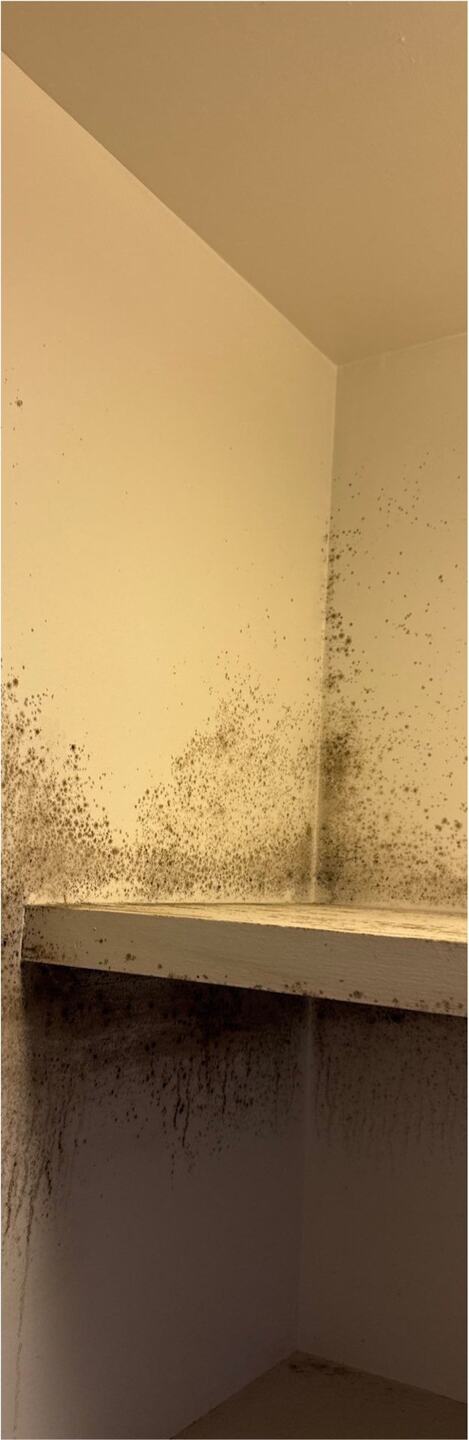
Six months later the smell is worse and there is a dark patch in a closet.
If it is any comfort, this is not unusual. Lawrence Berkeley National Laboratory, pooling several US studies, found that around 47% of US homes have dampness or mold. Not 47% of people — 47% of houses, which is close enough to half that your neighbors are probably dealing with it too. And when the CDC inspected 112 New Orleans homes after Katrina, 45.5% had visible mold growth and 17% had heavy coverage. In a climate this humid, it is a constant battle rather than a rare event.
A musty smell with nothing visibly wrong is a humidity problem, not a leak. The air in the house is carrying too much moisture, and mold is growing somewhere you cannot see — inside a wall, in the ductwork, behind furniture, on the back of a closet wall.
What you are actually smelling
That smell is not dampness itself. It is a by-product: as mold grows and digests whatever it is living on, it releases gases. Those gases move freely through a house even when the growth producing them is completely enclosed.
Which is why the smell reaches you long before anything is visible, and why the room where you notice it most is often not the room with the problem. Air moves. The smell rides along with it, usually pushed around by the air conditioning.
It can be one thing. More often it is several adding up.
There is no rule here, and anyone who gives you one is simplifying.
A single problem can absolutely do it on its own. If your air conditioner stops working, that alone is enough. A real leak is enough. Any one failure large enough will grow mold by itself.
But in our experience, most of the houses we walk into do not have one problem. They have several moderate ones that added up — and that is why the homeowner could not find "the" cause. There wasn't one.
It might be one thing. It might be two, or four, or a combination nobody would have guessed. What matters is the total, not the count.
Think of your house as having a humidity budget. Every defect spends part of it. A hot attic costs a few points. The wrong air filter costs five to ten. An air conditioner starting to slip costs a few more.
Your system was keeping up with two of those. Add the third and it stops keeping up. Five points here, six there, two more — and a house sitting at a comfortable 52% is suddenly in the mid-60s. Above 60% is where mold grows.
That is why so many people tell us the same thing: nothing changed, and then suddenly we had mold. Often nothing did change dramatically. The last few points simply got spent.
It is also why fixing one item sometimes does not solve it. If three problems put you over and you correct one, you can still be over.
Which is the whole reason we look at the entire house rather than the spot with the stain on it.
What actually causes it
South Louisiana air is wet almost year-round. A house does not need a leak to have a moisture problem — it only needs to be unable to shed the moisture already in it. Nearly every case we are called to involves some combination of these.
The air conditioner is not pulling humidity out
This is the most common cause we find, and the most misunderstood, because the system appears to be working. The house is cold. It just is not dry.
An air conditioner dehumidifies as a side effect of cooling: warm wet air passes over a cold coil, moisture condenses on it and drains away. If anything interferes with that process, you get cooling without drying.
- Low on refrigerant — the coil does not behave the way it should, and moisture removal drops off
- Overcharged — same outcome from the opposite direction
- No proper air balancing — some rooms get plenty of air, others barely any. The starved rooms stay humid, and those are where mold shows up first
- Poor airflow through the unit — a dirty coil, a crushed or undersized return, a blower not moving what it should
A house that feels cold and still feels clammy is telling you this directly.
The wrong air filter — and this one goes against what you have been told
Small, cheap, and almost nobody knows about it.
The wrong air filter for this climate can raise the humidity inside a house by five to ten percentage points. On its own. That alone can be the difference between a house that grows mold and one that does not.
High-MERV filters are sold hard on the promise of cleaner air, and in a dry climate that trade makes sense. Here it does not. A restrictive filter chokes airflow across the coil — and airflow is exactly what lets the coil pull water out of the air. You end up with a house that filters beautifully and stays damp.
Our standard recommendation in this climate is MERV 4 or MERV 5. What you want is easy flow and air movement through the system, not maximum filtration. It is on our quotes, and it is one of the few things a homeowner can change this afternoon for a few dollars.
Go and look at what is in your return right now.
The attic is too hot
An attic with poor ventilation becomes an oven full of wet air sitting directly above your ceiling. That heat and moisture work downward into the living space, and they make the air conditioner fight conditions it was never sized for.
Homeowners almost never suspect the attic, because nobody smells anything up there and nothing looks wrong. But it raises the moisture level of the entire house, and it is one of the biggest mold drivers in this part of the country.
Rooms that never get any air
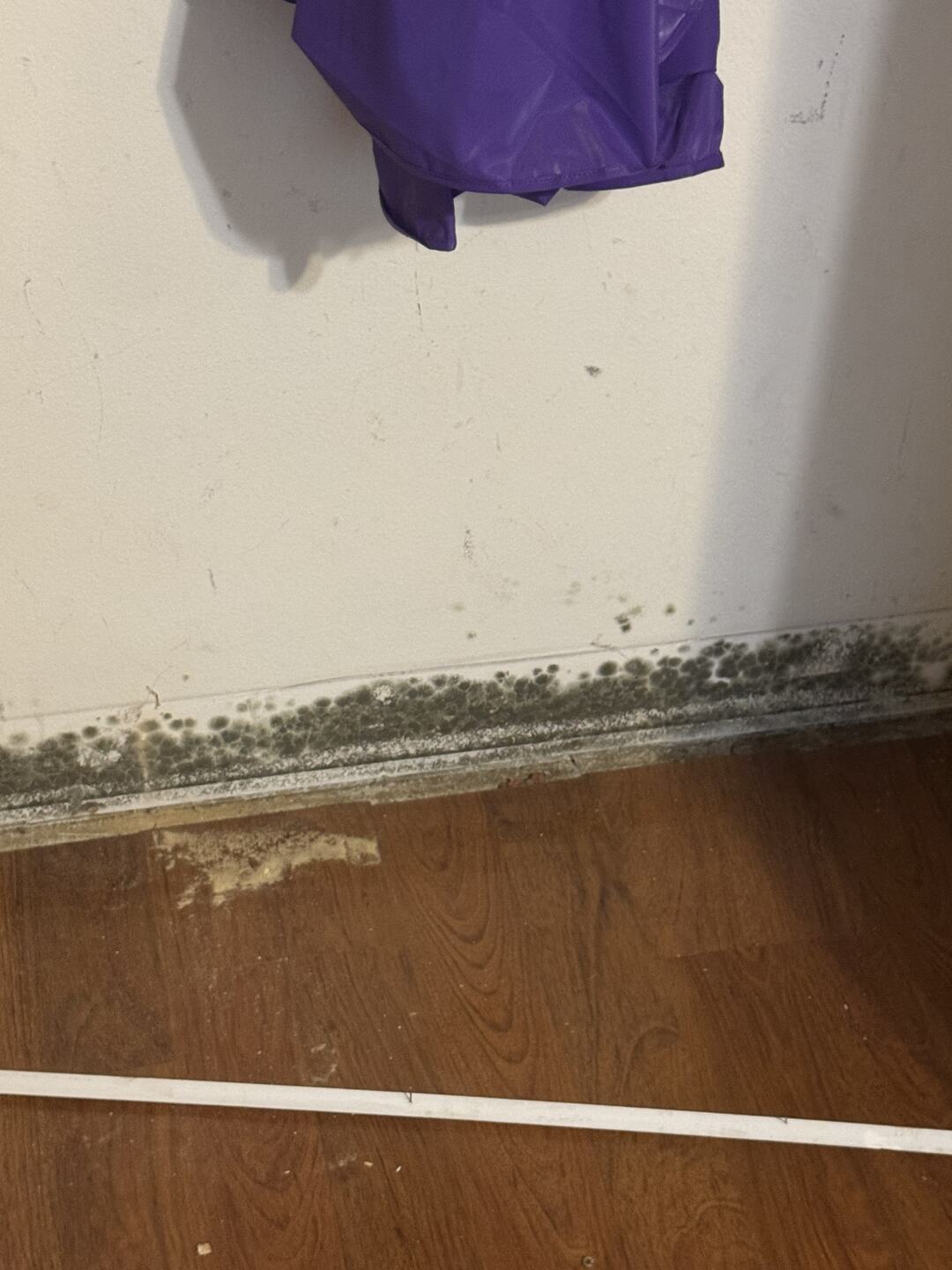
Closets, spare rooms, bathrooms with the door kept shut. Enclosed spaces with no air movement and a temperature difference against an exterior wall — that is where a house with borderline humidity will show mold first.
If the musty smell is strongest when you open a particular closet, that is not where the problem started. It is where the house's overall humidity is showing up first. The same mechanism explains bathroom ceiling mold.
A slow leak that got ignored
Not a burst pipe — those get dealt with. The slow ones: a supply line weeping behind a vanity, a shower pan that failed months ago, roof damage after a storm that never looked serious enough to chase.
The common factor is time, not severity. A small amount of water for a long period does far more mold damage than a large amount for a short one.
Six things worth checking before anyone comes out
- Buy a humidity gauge. They cost about ten dollars. Indoor relative humidity should sit around 45–55%. Consistently above 60% and you have your answer. Put it in the room that smells worst.
- Look at your air filter. Check the type and how restrictive it is, and when it was last changed.
- Open closets that stay shut and look at the back wall and the ceiling, especially on exterior walls.
- Smell the air at a vent with the system running. If the smell is strongest there, the growth is likely in the ductwork or at the air handler.
- Check whether the house feels cold but clammy. That is the AC-not-dehumidifying signature.
- Look behind furniture on exterior walls — particularly anything pushed flat against one.
What not to do
Do not mask it. Air fresheners and candles change the smell without changing the cause, and they cost you the early warning. That smell is the most useful information you have.
Do not use bleach. If you find growth and reach for bleach, you will make it worse. Bleach is mostly water, and on drywall, wood or trim the liquid soaks into the material and feeds the growth underneath while the surface looks cleaned. What you get is mold that is deeper, wetter and harder to reach.
Do not just clean what you find and stop. If the humidity that caused it is unchanged, it comes back — and you have paid for the same problem twice.
Why the smell keeps coming back after remediation
This is the complaint we hear most about work done by somebody else. The mold was removed, the customer paid, and within a year it is back.
It comes back because removing mold does not remove the reason it grew. If the air conditioner still is not dehumidifying, if the attic is still cooking, if the filter is still wrong — the house is exactly as hospitable to mold as it was before, and it will do the same thing again.
Mold certification teaches a procedure for after you find mold: contain, cut out, spray, vacuum, run an air scrubber. It does not teach how a house is built, how air and moisture move through it, or how to work out where the water came from. Those are different skills, and only one of them is taught in a certification class.
Before starting Mold Shield, our founder spent years as a superintendent for a residential homebuilder and as a project manager at a national restoration franchise. That construction background is why we trace the moisture first and the mold second.
What “I can smell it but I cannot see it” actually looks like
A recent call, and a common one. The homeowners had already paid for duct cleaning, an HVAC service, a contractor to pull up flooring over a small spot, and upholstery cleaning for their couches — which they then threw away anyway. And they could still smell it. Testing had been done more than once, and the spore counts moved every time somebody did something. A certified assessor had already been out. There was almost nothing visible to find.
None of that was careless. They were guessing — working by process of elimination, trying everything and anything, because nobody had told them what they were looking at. That is the position almost everyone is in when they call us.
So the job was not to find mold. It was to find the reason.
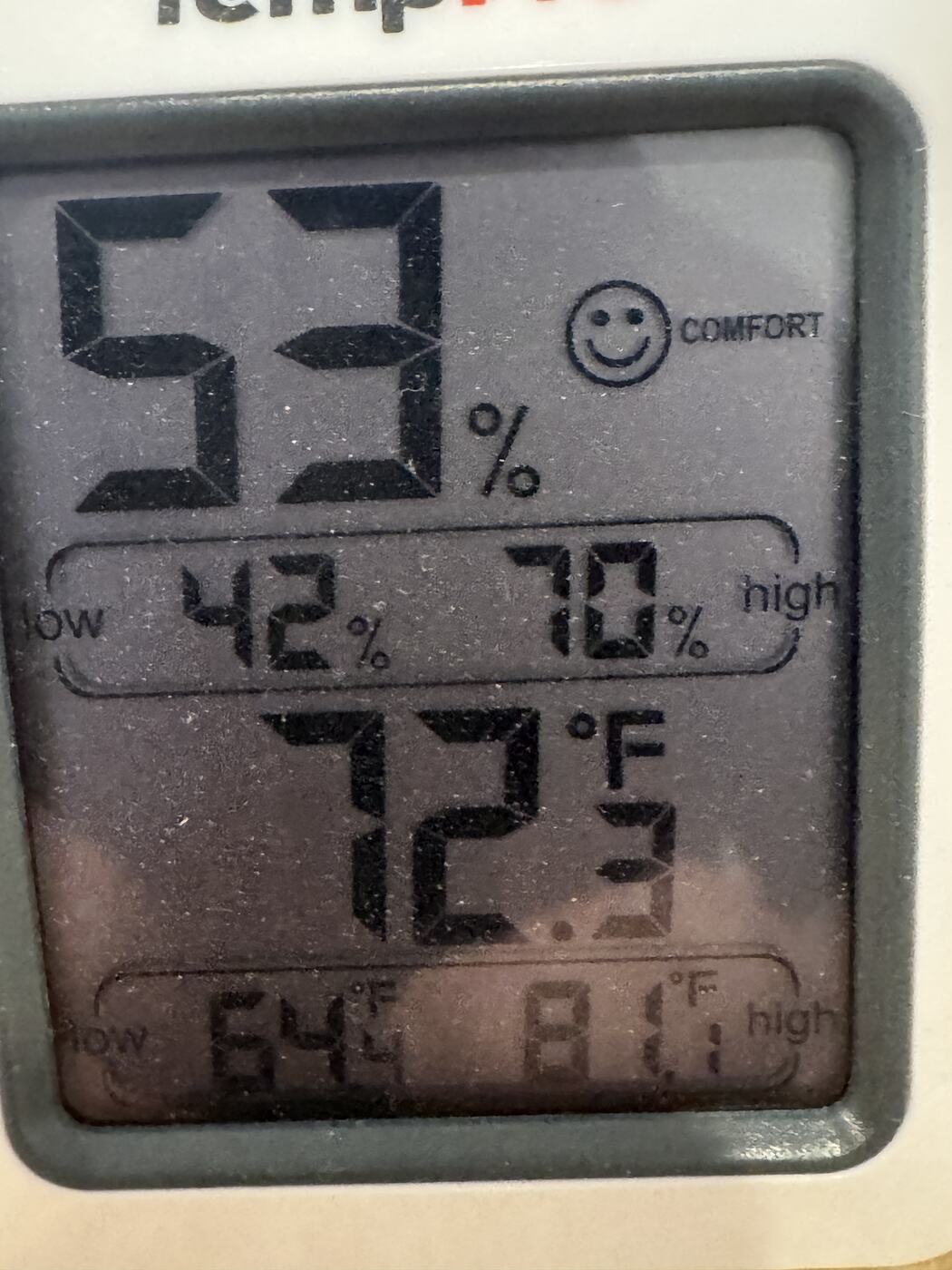
The walls read 12% moisture, which is dry. A smoke test in the attic cleared straight out through the ridge vent, so the ventilation was working as designed. Insulation was thin in places, which lets ceilings run cool enough for moisture to settle on them. No leak, no blocked attic. What was left was the air inside the house.
The ultraviolet light — and what it does not tell you
When the visible inspection turns up almost nothing, one of the last things we try is a specific frequency of ultraviolet light. Some organic material fluoresces under it. It is a way of finding somewhere to look, in a house where looking has already failed.
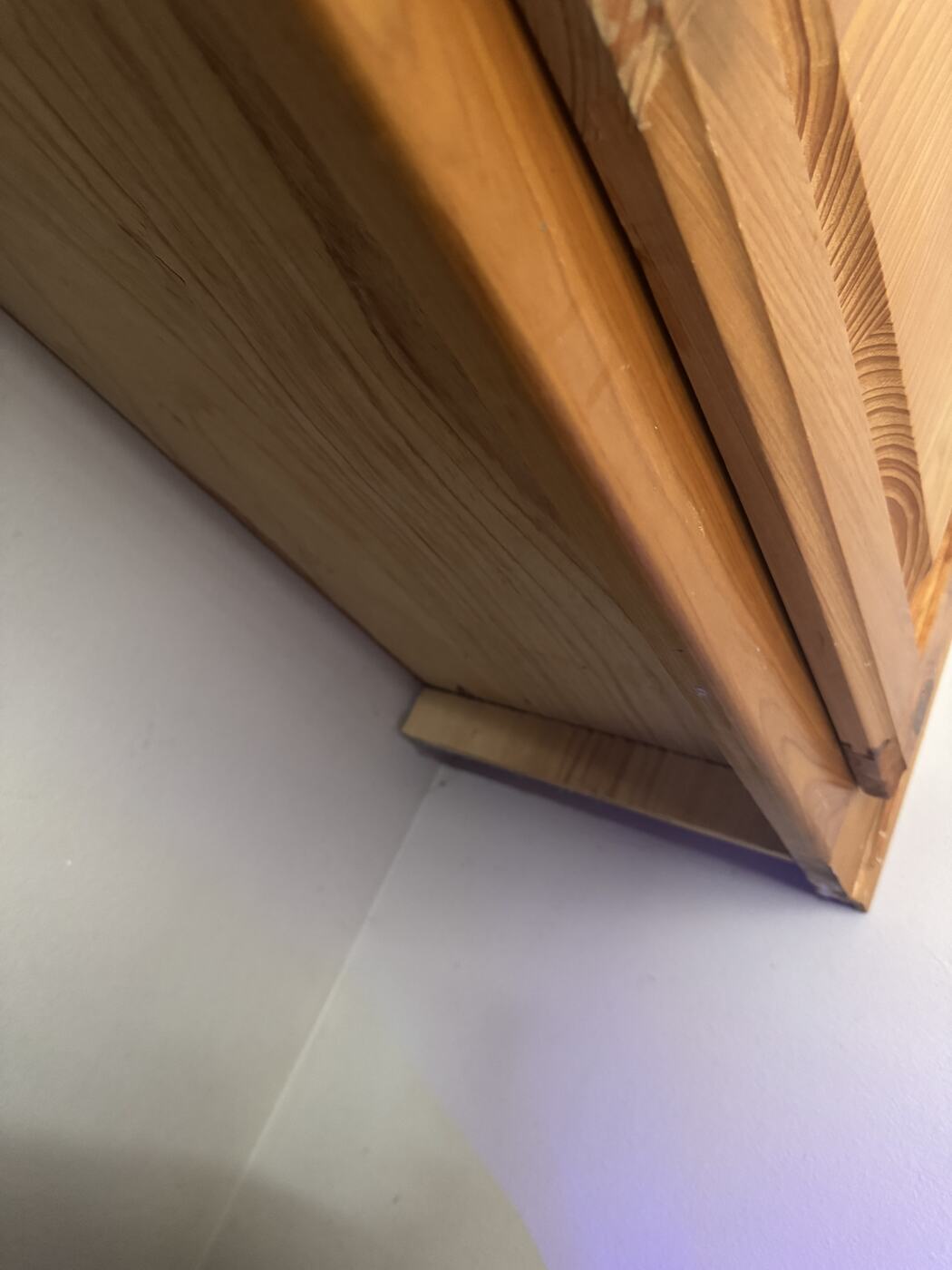
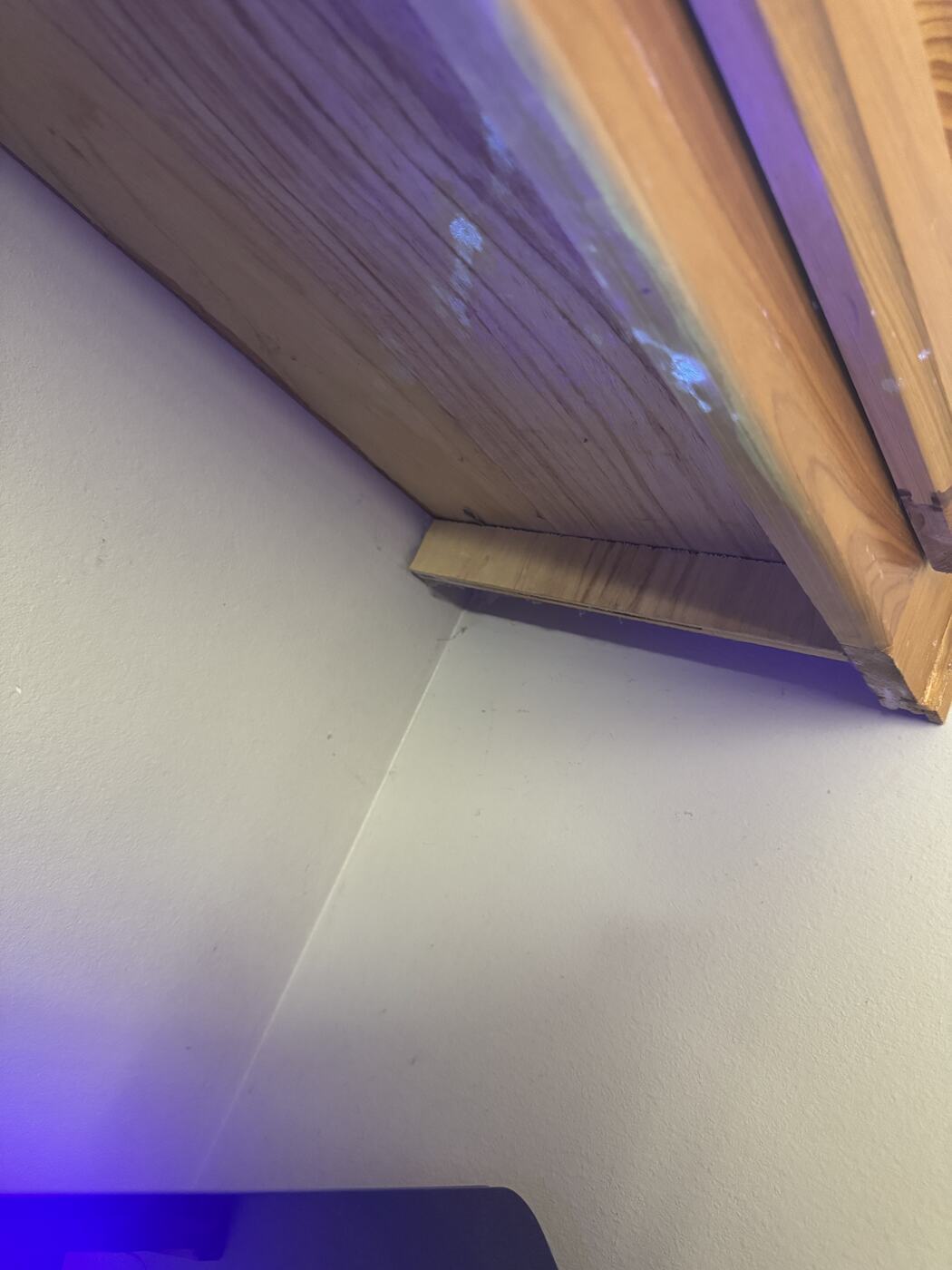
This is not a test, and we say so on site. Plenty of things fluoresce — some finishes, adhesives, mineral deposits, dye residue. Without a swab sent to a lab, nobody can tell you that glow is mold, and anybody who does is guessing in front of you.
What it is worth saying instead: there is something there that you cannot see, and it is worth confirming. That is a reason to sample. It is not a reason to quote you for demolition.
That house is still open at the time of writing. We have not published an outcome, because there is not one yet.
When to have someone look
- You can see mold growing. Visible growth is not something to monitor
- Anything you are not comfortable cleaning yourself, or that worries you. That is a good enough reason on its own — containment, protective equipment and the right supplies are what stop most people, not the size of the spot
- It comes back after previous mold work
- You can smell it but cannot find it — that usually means it is enclosed
What we tell every customer — it is on our quotes
This is the prevention side. It is what keeps a house from growing mold again; it does not remove growth that is already there.
1. Keep indoor humidity under 50%. Not 55, not 60. Under 50. That is the number we hold in our own houses, because we have seen what 65 to 70% does to a home.
2. Use a MERV 4 or MERV 5 filter. In this climate, airflow matters more than filtration. A high-MERV filter costs you dehumidification.
3. Get a dehumidifier and set it to 50%. It only runs when the house goes above that. Our founder has one in his own home and put them in both of his children's houses.
None of that requires hiring anyone, and in a house that is only a few points over, it can be enough to keep the problem from coming back.
Our evaluation is free, anywhere in South Louisiana. If the answer is a filter change and running your bathroom fan longer, we will tell you that and leave.
Where those numbers come from
~47% of US homes with dampness or mold — Lawrence Berkeley National Laboratory, Indoor Air Quality Scientific Findings Resource Bank, pooling several published US residential studies. Largely occupant self-reported. Frequently miscredited to NIOSH online; NIOSH quotes it and cites Berkeley Lab.
45.5% visible mold, 17% heavy coverage — CDC, MMWR, assessment of 112 New Orleans homes, October 2005. Homes were inspected rather than surveyed.
We check our sources before publishing a number. A statistic without a source behind it is worth nothing, and a great many mold statistics circulating online have no traceable origin at all.
Common questions
What does a musty smell in a house mean?
It usually means mold is growing somewhere out of sight and the indoor humidity is too high. The smell is produced by gases released as mold digests the material it is growing on, and those gases travel through a house even when the growth itself is fully enclosed in a wall, a duct or behind furniture.
Can you have mold with no leak and no visible growth?
Yes, and in a humid climate it is common. Mold does not require liquid water — sustained high humidity in the air is enough. That is why a house with no leak anywhere can still grow mold in closets, on exterior walls, in ductwork and behind furniture.
What should indoor humidity be?
Roughly 45 to 55 percent. Consistently above 60 percent creates conditions mold can grow in. A humidity gauge costs about ten dollars and is the fastest way to confirm whether a musty smell has a measurable cause.
Can an air filter really affect humidity?
Yes. An overly restrictive filter reduces airflow across the evaporator coil, and airflow is what allows the coil to condense moisture out of the air. In a humid climate the wrong filter can raise indoor humidity by five to ten percentage points, which is often the difference between a house that grows mold and one that does not.
Why does the musty smell come back after mold removal?
Because removing mold does not remove the conditions that grew it. If the air conditioning is still not dehumidifying, the attic is still overheating, or the humidity source was never identified, the house remains exactly as hospitable to mold as before and growth returns.
Is a musty smell dangerous?
The smell itself is not, but it indicates active mold growth and elevated humidity, which can affect people with asthma, allergies or compromised immune systems. Persistent unexplained congestion, headaches or allergy symptoms that improve when someone leaves the house are worth taking seriously.