
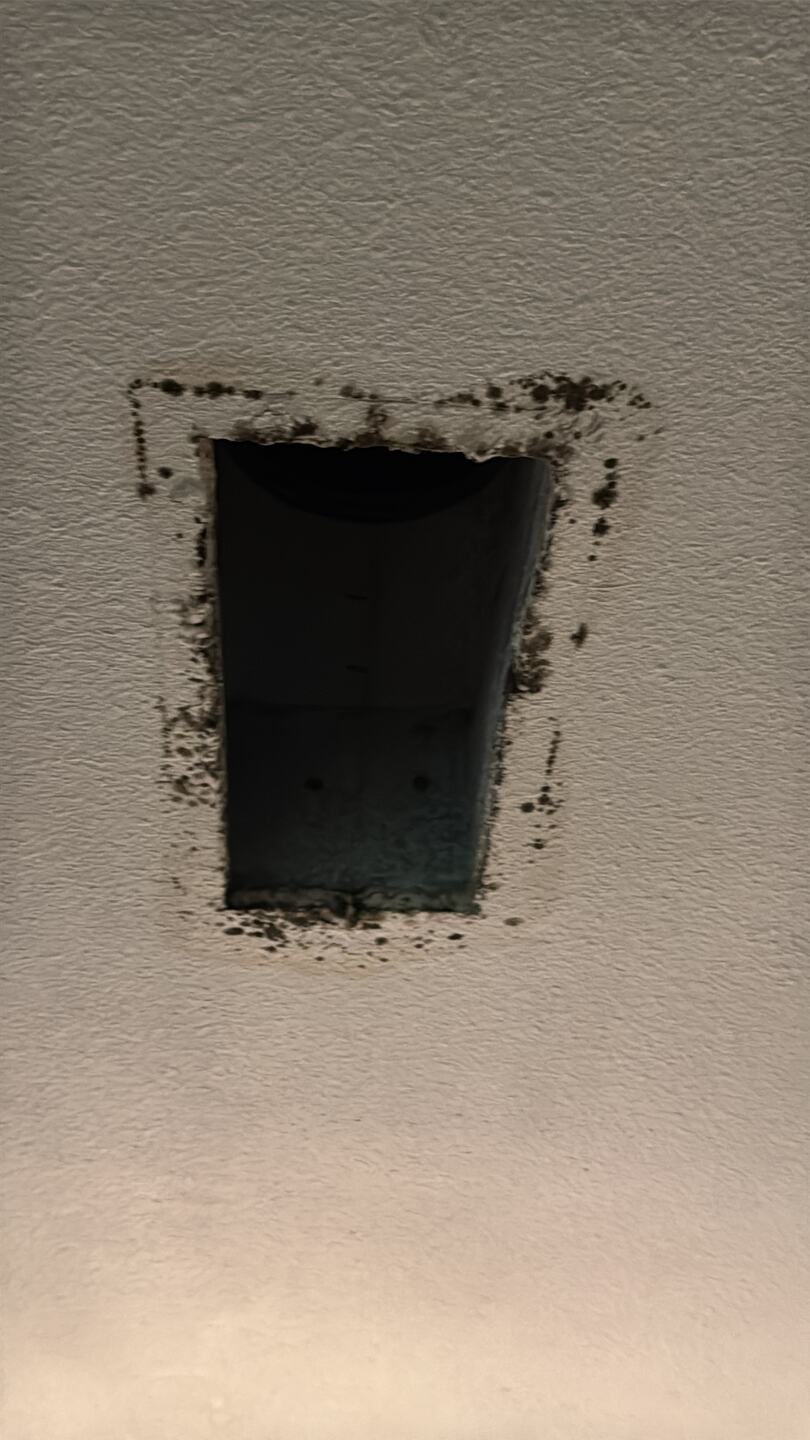
People usually notice this one of two ways. Either dark speckling appears on the ceiling or wall right around a vent, or the air coming out smells musty when the system kicks on.
Both point at the same place, and it is not the vent cover.
Why ductwork is the first place mold shows up
An air conditioning system is the wettest thing in your house that nobody thinks of as wet.
Cooling works by passing warm, humid air across a cold coil. Moisture condenses out onto that coil and drains away — that is the dehumidifying half of what an air conditioner does, and it is a side effect rather than the main job. So inside the air handler you have a cold wet surface, a drain pan holding water, and air moving across both of them all day.
Add dust, which is organic, and you have every condition mold needs in the one part of the house that then distributes air to every room.
That is why the vents show it first. Not because vents are dirty, but because the equipment behind them is the wettest, dustiest, most air-moved space in the building.
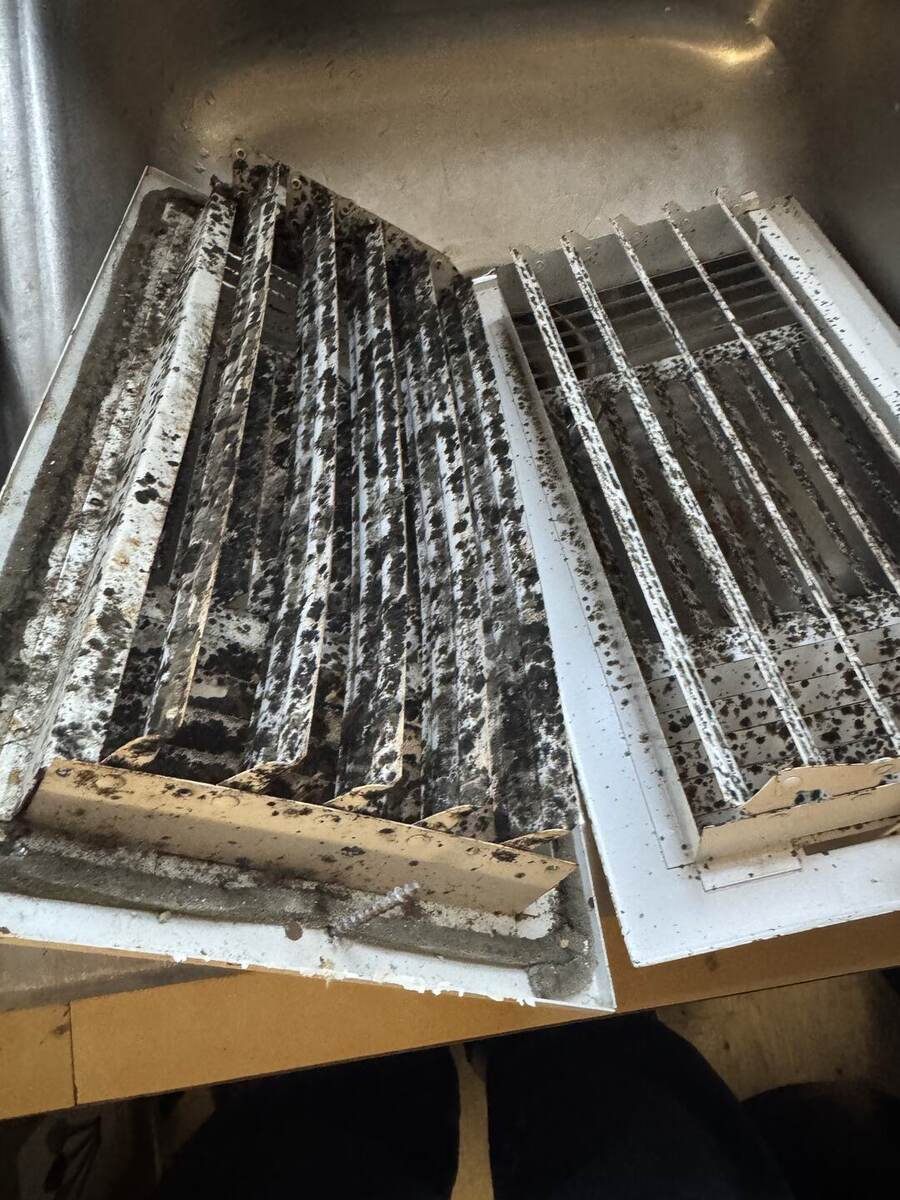
What is actually causing it
The system is cooling but not dehumidifying
This is the one we find most, and it fools people because the house is cold. It just is not dry.
If anything interferes with how the coil condenses moisture, you get cooling without drying — and the humidity that should have drained away stays in the air and on the surfaces:
- Low on refrigerant, or overcharged — either way the coil does not behave as designed and moisture removal drops
- No proper air balancing — some rooms get plenty of air, others almost none. The starved rooms stay humid and grow mold first
- Poor airflow through the unit — a dirty coil, a crushed or undersized return, a blower not moving what it should
- Oversized for the house — it cools fast, shuts off, and never runs long enough to pull real moisture out
A house that feels cold and still feels clammy is telling you this directly.
The wrong air filter
Small, cheap, and almost nobody knows about it.
The wrong air filter for this climate can raise the humidity in a house by five to ten percentage points. On its own. That can be the whole difference between a system that stays dry and one that grows mold.
High-restriction filters are sold hard on cleaner air. On a system not designed for that much resistance, they choke airflow across the coil — and airflow is what lets the coil condense water out of the air. You end up filtering beautifully and running damp.
It is worth walking over and looking at what is in your return right now.
A blocked or overflowing condensate drain
The drain pan under the coil carries condensed water out of the house. Those lines clog — with dust, with algae, with time. When one backs up, the pan holds standing water or overflows into the air handler cabinet, the closet, or the ceiling below.
An AC pan that overflowed a couple of months ago and got mopped up is one of the more common calls we take. The floor dried. What went into the cabinet base, the subfloor or the wall did not.
The attic the equipment sits in
A lot of systems here live in the attic, along with the ductwork. If that attic is poorly ventilated it runs extremely hot and holds a great deal of moisture, and the equipment is working inside that.
Cold ducts in hot wet air is a condensation problem by design — you get sweating on the outside of the ductwork, wet insulation, and moisture that has nowhere to go. A hot attic also makes the air conditioner fight conditions it was never sized for, which loops back to the first cause.
Why duct cleaning alone usually does not fix it
Duct cleaning has its place, and if there is growth in the system it is part of the answer. But it is a cleaning, not a repair.
If the coil is still not dehumidifying, the filter is still wrong, the drain is still blocked, or the attic is still cooking the equipment, the ducts are simply going to get wet again. We have seen plenty of houses on their second and third cleaning with the same problem, because nobody looked at why the system was wet.
Clean the ducts after the cause is fixed, not instead of.
What to check yourself
- Look at your filter. The type, how restrictive it is, and when it was last changed.
- Buy a humidity gauge. About ten dollars. Indoor humidity should sit around 45–55%. Consistently above 60% and the system is not keeping up.
- Does the house feel cold but clammy? That is the cooling-without-dehumidifying signature.
- Check the condensate line for standing water in the pan or a slow drain.
- Look at more than one vent. One vent with growth can be a local condensation issue. Several means it is the system.
- Smell the air when the system starts. A musty smell strongest in the first minute of a cycle points at the equipment.
Do not spray bleach into a vent
It is a common instinct and it is a bad one. Bleach is mostly water, so on porous surfaces — duct board, insulation, the lining of flexible duct — it soaks in and feeds what is growing while the surface looks cleaned.
You are also introducing it into the airstream of your house. The full explanation of why bleach fails on mold is here.
How we handle it
Mold in a system is one of the clearest cases of a problem that has to be fixed at the cause, because the equipment will simply recreate the conditions otherwise.
We find where the moisture is coming from first, and we work with master HVAC technicians and an attic ventilation specialist — so if the answer is that the system needs correcting or the attic needs airflow, that gets handled rather than handed to you as a list of people to call. You are not paying a markup for that coordination either; you pay our partners' own prices.
Before starting Mold Shield, our founder spent years as a superintendent for a residential homebuilder and as a project manager at a national restoration franchise. Mold certification teaches what to do once you find mold. It does not teach how a building moves air and moisture — and with HVAC problems, that is the entire question.
If the system is cooling without drying, lowering the humidity in the house is the other half of this problem.
Common questions
What causes mold in air vents?
Moisture inside the system. The most common cause is an air conditioner that cools without dehumidifying — low or overcharged on refrigerant, poorly balanced, restricted airflow, or oversized so it short-cycles. Other causes are a blocked or overflowing condensate drain, a filter too restrictive for the system, and ductwork running through a hot poorly ventilated attic where cold ducts sweat in humid air.
Is mold in air vents dangerous?
It matters more than mold in a fixed spot, because the system distributes air to every room. People with asthma, allergies or compromised immune systems are most affected. Symptoms that appear or worsen when the system runs, and improve when people leave the house, are worth taking seriously.
Will duct cleaning fix mold in my vents?
Not on its own. Duct cleaning removes what is there but does not address why the system was wet. If the coil is not dehumidifying, the filter is wrong, the drain is blocked or the attic is overheating the equipment, the ducts get wet again. Clean the ducts after the cause is corrected, not instead of.
Can I spray bleach or a cleaner into the vents?
No. Bleach is mostly water and on porous surfaces such as duct board, insulation or flexible duct lining it soaks in and feeds growth beneath a surface that looks cleaned. It also puts the product into the airstream of the house.
Why does only one vent have mold around it?
A single vent with growth around the register is often local condensation — cold air meeting a humid surface, common in a bathroom or a poorly balanced room. Growth at several vents points at the system itself rather than the room.
How do I know if it is in the ductwork or just on the cover?
You often cannot from the outside, which is the difficulty. Growth on a removable cover can be cleaned; growth on porous duct lining generally cannot and the material has to be addressed. Several affected vents, a musty smell strongest when the system starts, and indoor humidity consistently above 60% all point to the system rather than the covers.