
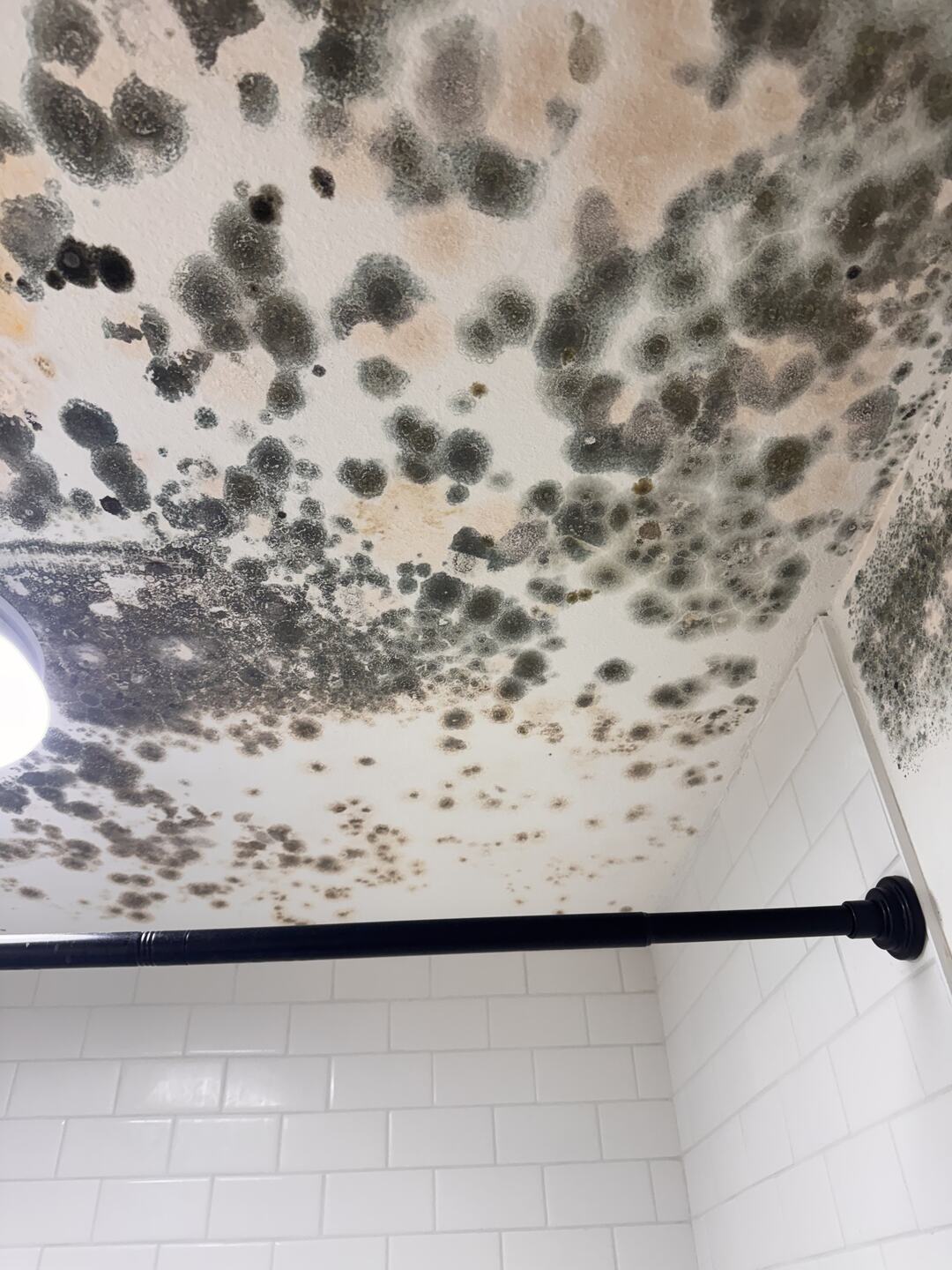
Black or gray speckling on a bathroom ceiling, usually starting near the shower or above the tub, sometimes creeping toward a corner. It is one of the most common things homeowners ask us about, and the first assumption is almost always the same: something is leaking from above.
Usually nothing is.
Bathroom ceiling mold is a ventilation problem, not a plumbing problem. Hot shower moisture gets trapped in a small sealed room, condenses on the coolest surface — the ceiling — and stays there long enough for mold to grow.
Why the ceiling, and not the walls
A hot shower puts a large amount of water into the air of a very small room in a few minutes. That warm, wet air rises. The ceiling is generally the coolest surface in the room, especially with an attic above it, so that is where the moisture condenses first.
It only becomes mold if the moisture is still there hours later. In a bathroom that exchanges its air, it is not. In a bathroom that does not, it is — twice a day, every day.
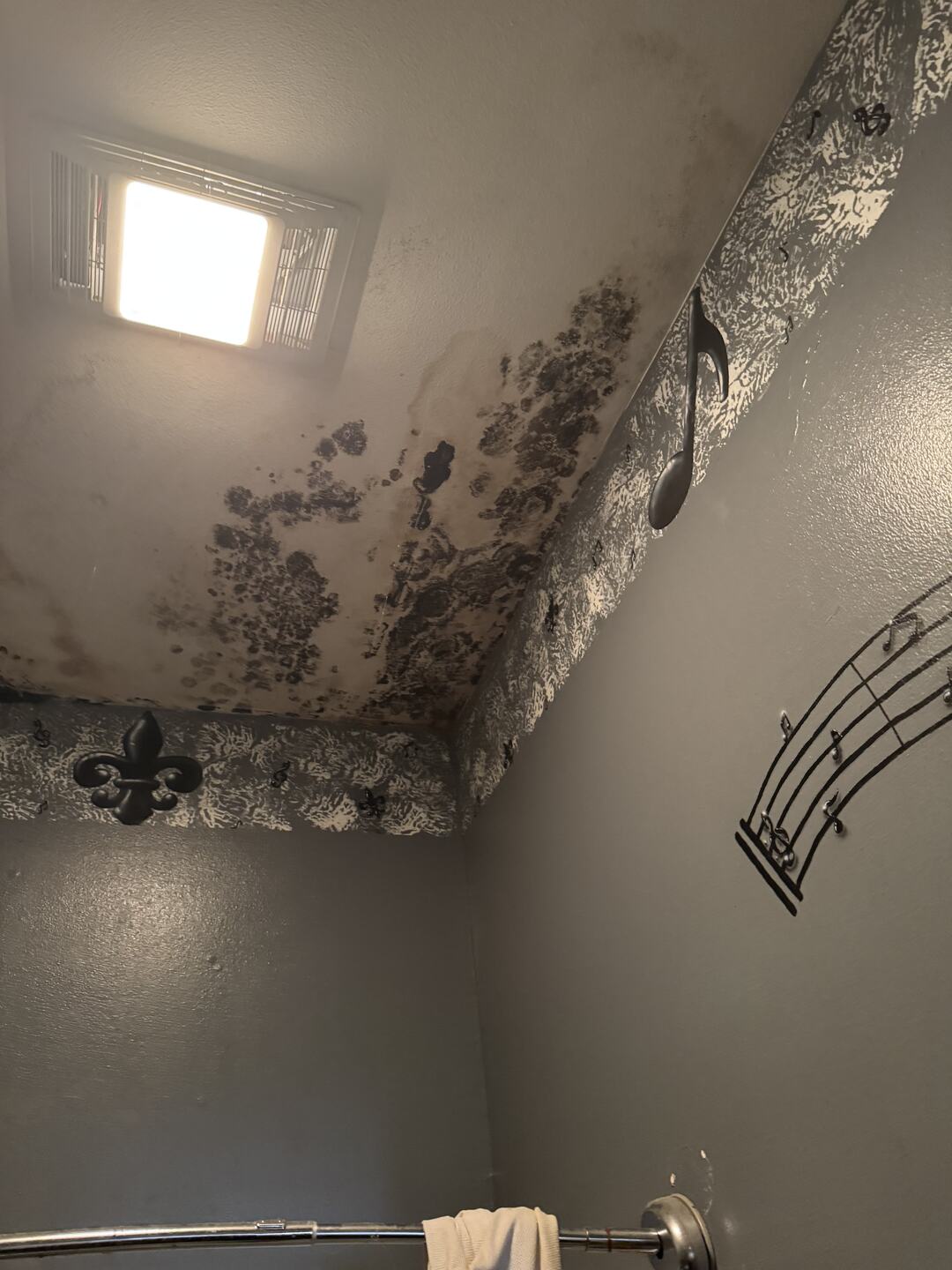
The three situations we find
1. There is no exhaust vent at all
A lot of smaller bathrooms simply do not have one. Nothing was ever installed, and the only ventilation is the door and whatever gap exists beneath it. In a humid climate that is not enough, and the ceiling shows it within a couple of years.
2. There is a vent, and it is not run long enough
This is the most common of the three, and it is worth being clear about: exhaust fans do work. The problem is almost never the fan. It is how long it runs.
Most people switch the fan on while they are in the shower, turn it off on the way out, shut the door and leave. The fan ran for ten minutes against a room that is now saturated.
With the door closed, the fan is drawing its replacement air through the small gap underneath. It will still equalize the room with the rest of the house — it just takes a long time to do it. Far longer than the fan is usually left on. So the room sits sealed and wet for hours afterwards, which is the part that actually matters.
The fan is not the problem. The run time is. Ten minutes with the door shut does not dry a saturated bathroom. It needs to keep running well after the water stops — and it works far faster with the door open.
3. The room never fully dries out anyway
Here is the part almost nobody accounts for. A bathroom has standing water in it twenty-four hours a day, whether anyone has showered or not.
- The toilet bowl holds standing water constantly, with an open surface evaporating into the room.
- Every P-trap — sink, tub, shower — holds standing water permanently by design. That is what stops sewer gas coming back up.
None of that is a fault and none of it should be changed. But it means a closed-up bathroom has a continuous, low-level moisture supply feeding into the air around the clock. Add two hot showers a day on top of it, and a room that never exchanges its air is being asked to do something it cannot.
And check where the fan actually goes
Fans get weak with age and clogged with dust, and some are undersized for the room. Some were never ducted outside at all — they discharge into the attic, which moves the moisture problem rather than solving it, and can create a second one directly overhead.
What actually fixes it
- Leave the fan running well after the shower. This is the big one. Thirty minutes minimum, and longer if the door is shut. A timer switch does it without anyone having to remember — it is an inexpensive part and it solves most bathroom mold on its own.
- Open the door when you leave. Free, and it lets the fan move several times more air. Open, not cracked.
- Give the fan somewhere to draw air from. If the door genuinely has to stay closed, it needs a real gap underneath or a transfer vent, and the fan needs to run longer still.
- Check where the fan actually discharges. It should terminate outside the house, not in the attic.
- Install a fan if there is not one. In this climate a bathroom without ventilation will keep doing this.
If it keeps coming back, the problem is bigger than the bathroom
A bathroom ceiling that regrows mold after being cleaned and ventilated properly is usually telling you the whole house is carrying too much humidity. In South Louisiana the causes are consistent: an air conditioning system that is low or overcharged on refrigerant, badly balanced or short on airflow, so it cools without dehumidifying — or an attic that runs too hot and drives moisture down into the rooms below.
There is also a smaller one people never suspect: the wrong air filter for this climate can raise the humidity in a house by five to ten percentage points on its own.
When the bathroom is one symptom among several — closets that smell musty, a spare room that feels damp, mold around vents — the bathroom is not the problem.
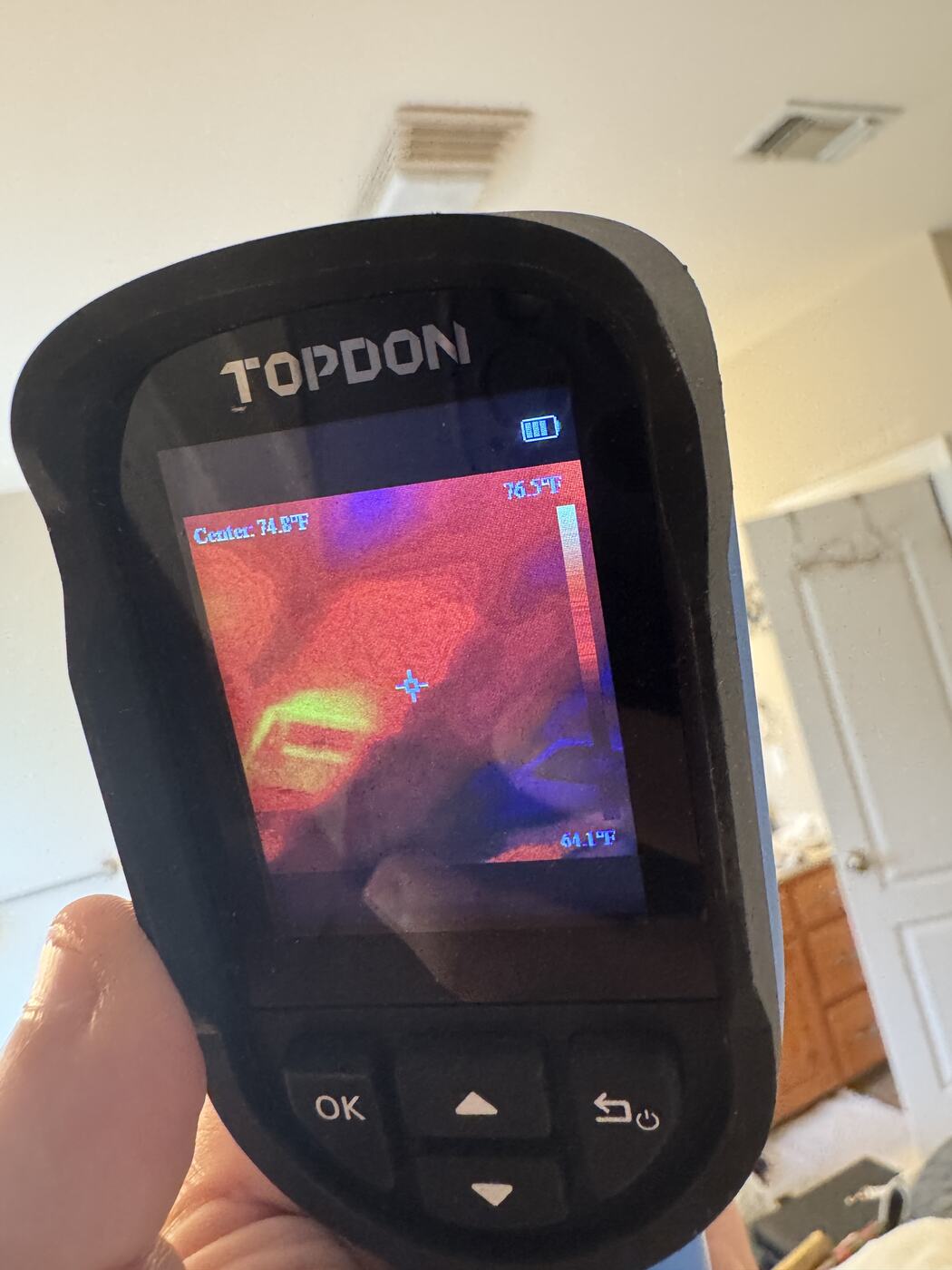
The same thing happens in closets
Small closets are the identical mechanism at a different address. Enclosed space, a door that is rarely opened, no air movement, and a temperature difference against an exterior wall or a hot attic above. Mold appears on the back wall, on the ceiling, on stored items, with no water source anywhere near it.
Anywhere in a house that air does not move, and a temperature difference exists, is a candidate. If the house is not set up right to begin with, those are the spots that show it first.
Should you clean it yourself?
If it is a small patch and you fix the ventilation at the same time, cleaning it is reasonable.
Do not use bleach. It is the most common advice online and it is bad advice. Bleach is mostly water. On a porous surface — drywall, a painted ceiling, wood trim — the liquid soaks straight into the material and feeds the growth underneath while the surface looks clean. You end up with mold that is deeper, wetter and harder to reach than before you started.
And if the ventilation does not change, it returns regardless of what you cleaned it with.
Get it looked at properly if it is bigger than you are comfortable and properly equipped to handle, if it has come back after cleaning, if the ceiling material feels soft or is staining through, or if anyone in the house has unexplained respiratory symptoms.
Keeping it from coming back is a whole subject of its own, and most of it costs nothing.
Common questions
Is mold on a bathroom ceiling dangerous?
A small amount of surface growth in a ventilated bathroom is a common household issue rather than an emergency. It matters more if the area is large, if it keeps returning, or if anyone in the house has asthma, allergies or a compromised immune system. Persistent growth also means the moisture problem is ongoing, and that tends to spread beyond the bathroom.
Why does it come back after I clean it?
Because cleaning removes the mold, not the moisture. If the room still traps humid air after every shower, the conditions are unchanged and growth restarts. Fix the ventilation and the cleaning holds.
Does an exhaust fan fix it?
Yes, if it runs long enough. Fans work — the usual mistake is running one only while the shower is going, then switching it off and closing the door. The room is saturated at that point and needs the fan to keep going for at least half an hour afterwards, longer with the door shut. A timer switch is the easiest fix. Also check that it discharges outside and not into the attic.
Should I use bleach on bathroom ceiling mold?
No. Bleach is mostly water, and on porous surfaces like a painted ceiling or drywall the liquid soaks into the material and feeds growth beneath a surface that looks cleaned. The result is mold that is deeper and harder to reach.
When is it a job for a professional?
When it is bigger than you are comfortable and properly equipped to handle — containment, protective equipment and the right supplies are what stop most people, not the size. Also when it returns after cleaning and improved ventilation, when the ceiling material is soft or staining through, or when mold is appearing in several rooms — which usually means whole-house humidity rather than a bathroom issue.