
That is the problem with a home mold test kit in one sentence. It will tell you that you have mold. So would the air on your porch — by a wide margin, as it turned out.
We ran the test properly and photographed it every day for four days, because everybody in this industry says these kits are useless and nobody ever shows you.
The house we ran it in
Worth describing, because it decides what the numbers mean.
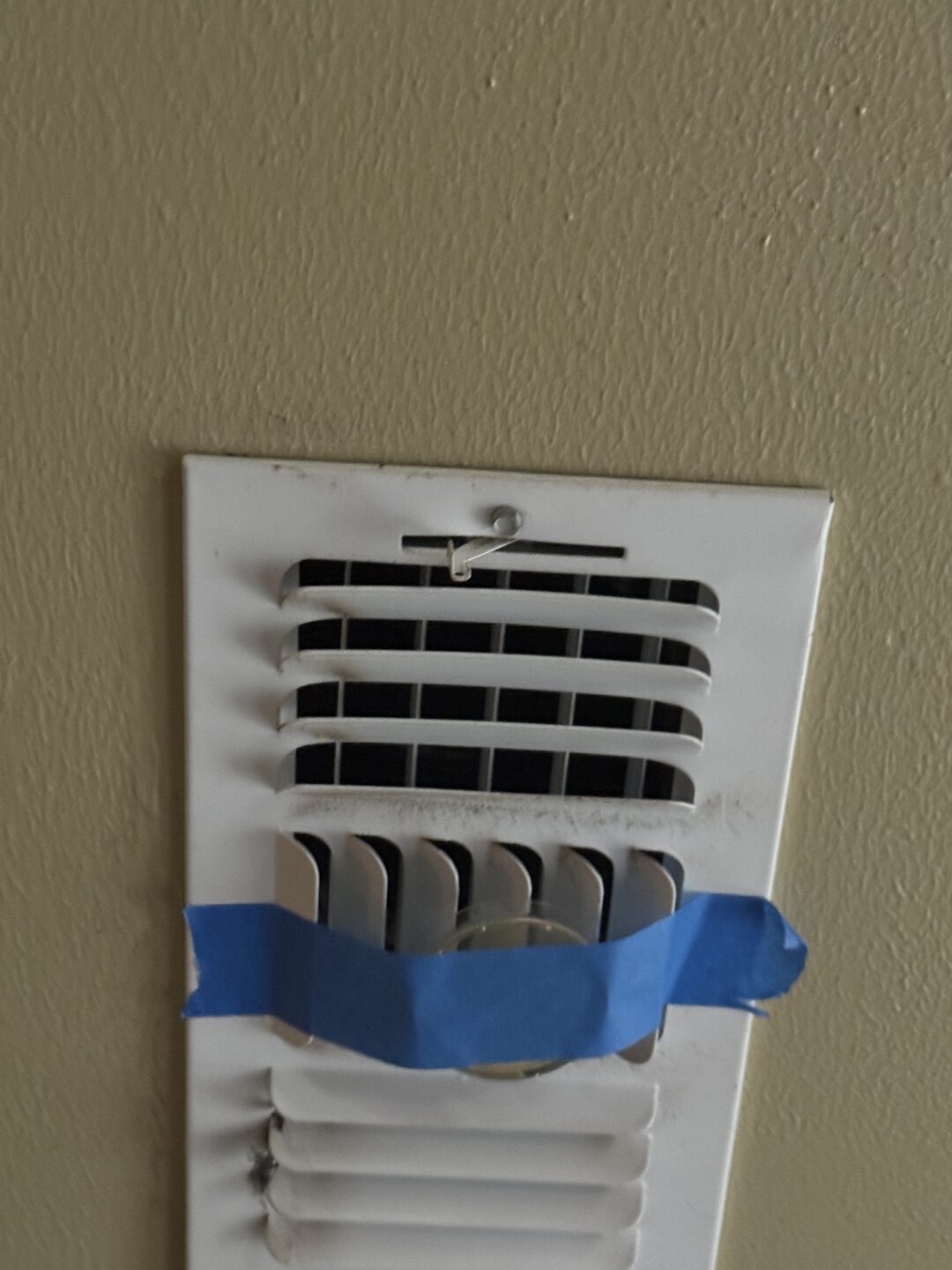
This house had a moisture problem in the past. It does not have one now — no visible moisture anywhere, and humidity held under 50% with a dehumidifier, maintained that way for a long stretch. Air purifiers are running. There is still some microbial growth visible on a couple of supply grilles, left from when the house was wet.
So it is not a clean house and it is not a wet one. It is a house that had a problem and has been held dry — which is exactly the situation a lot of people are in when they buy a kit.
Keep that in mind for the indoor results. They are low, and the reason matters.
What we did
Four plates, four sampling methods, one house in South Louisiana, placed 14 September 2026.
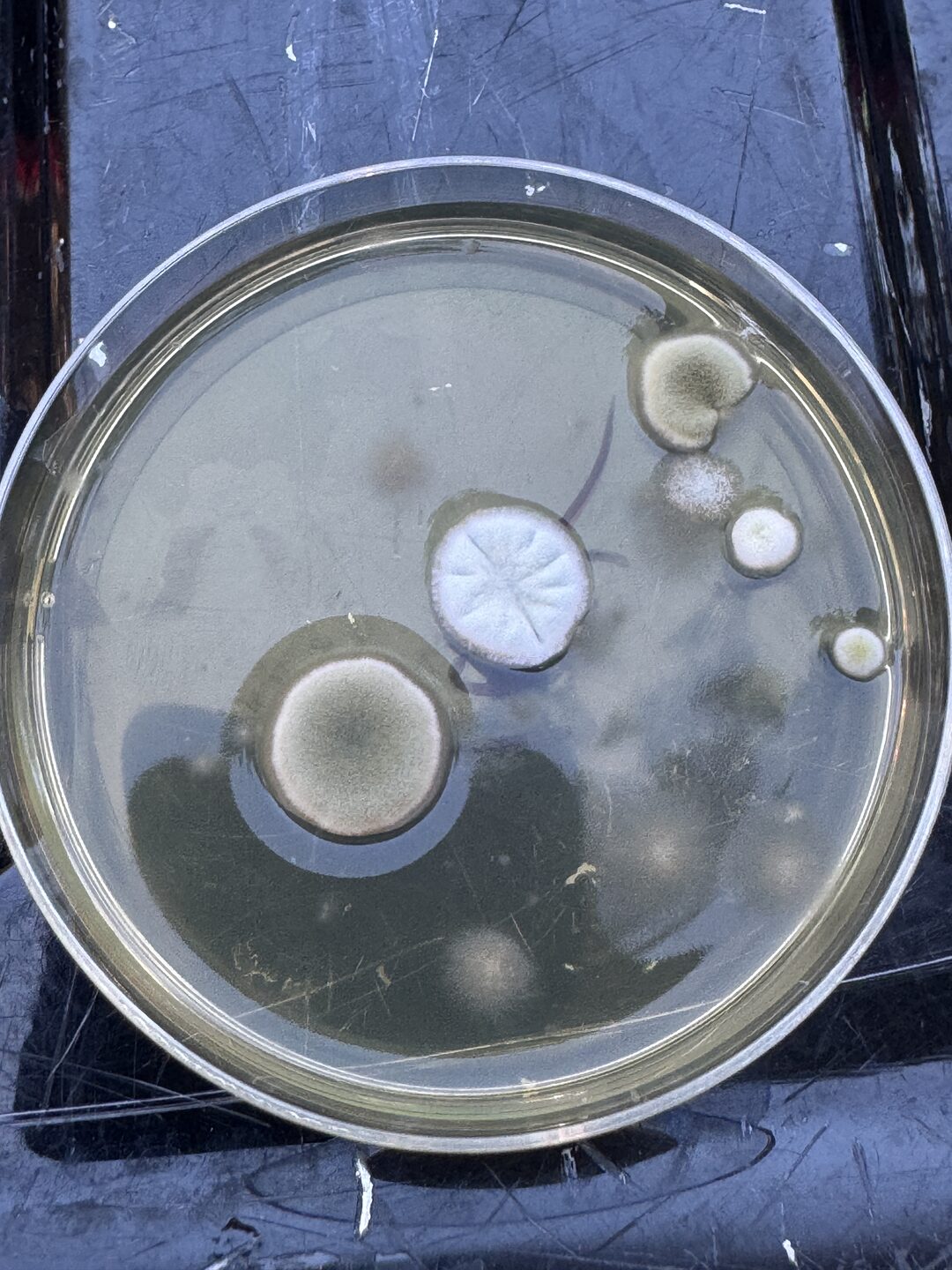
Taped over a supply vent. Plate open, held against the grille so conditioned air passed directly over it.
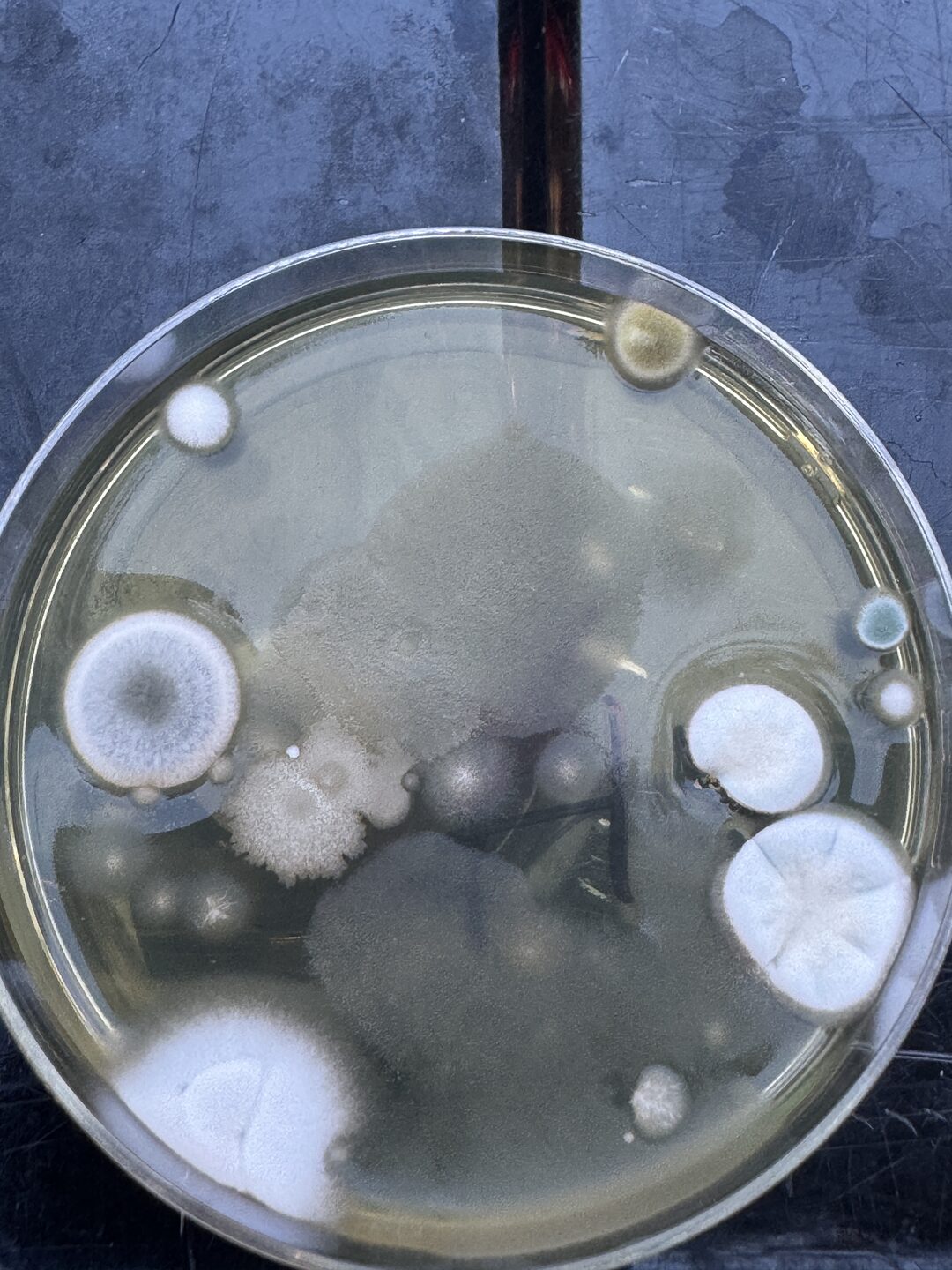
Swabbed off a vent. Growth knocked off a supply grille with a swab and transferred to the medium.
Indoor air. Plate left open in a room, no vent nearby.
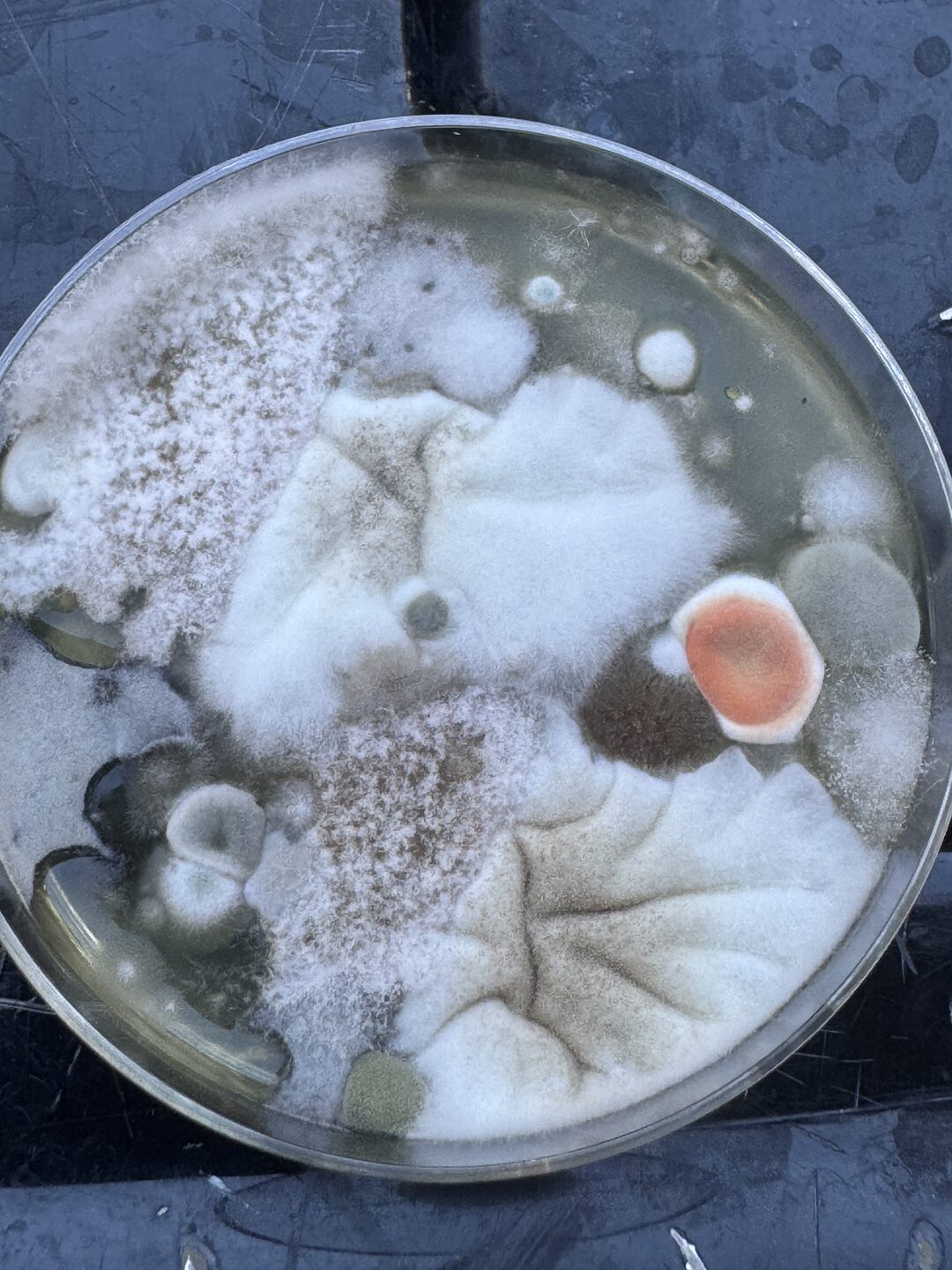
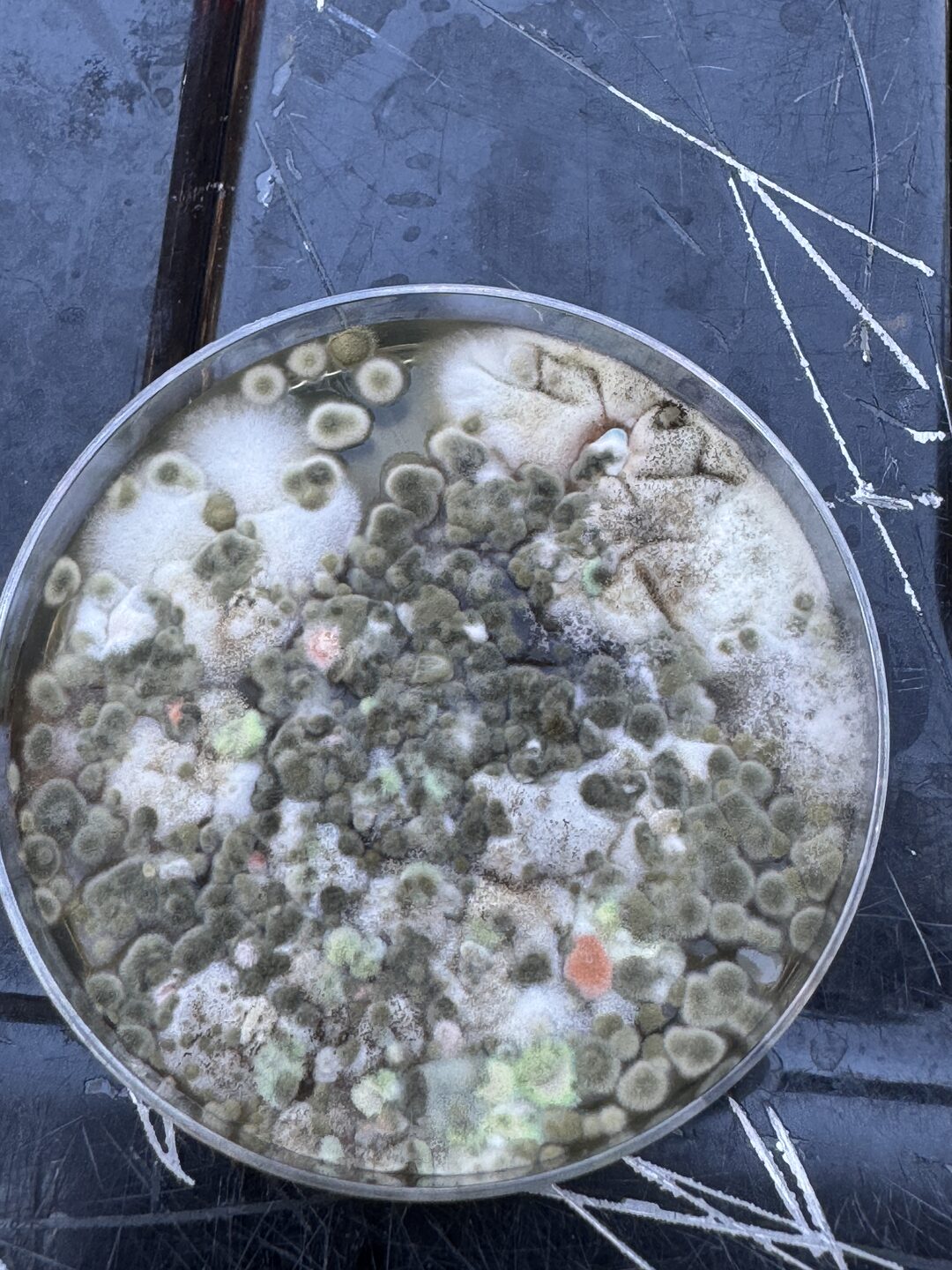
Outdoors. Same thing, outside the house. This is the one nobody does, and it is the only one that makes the others mean anything.
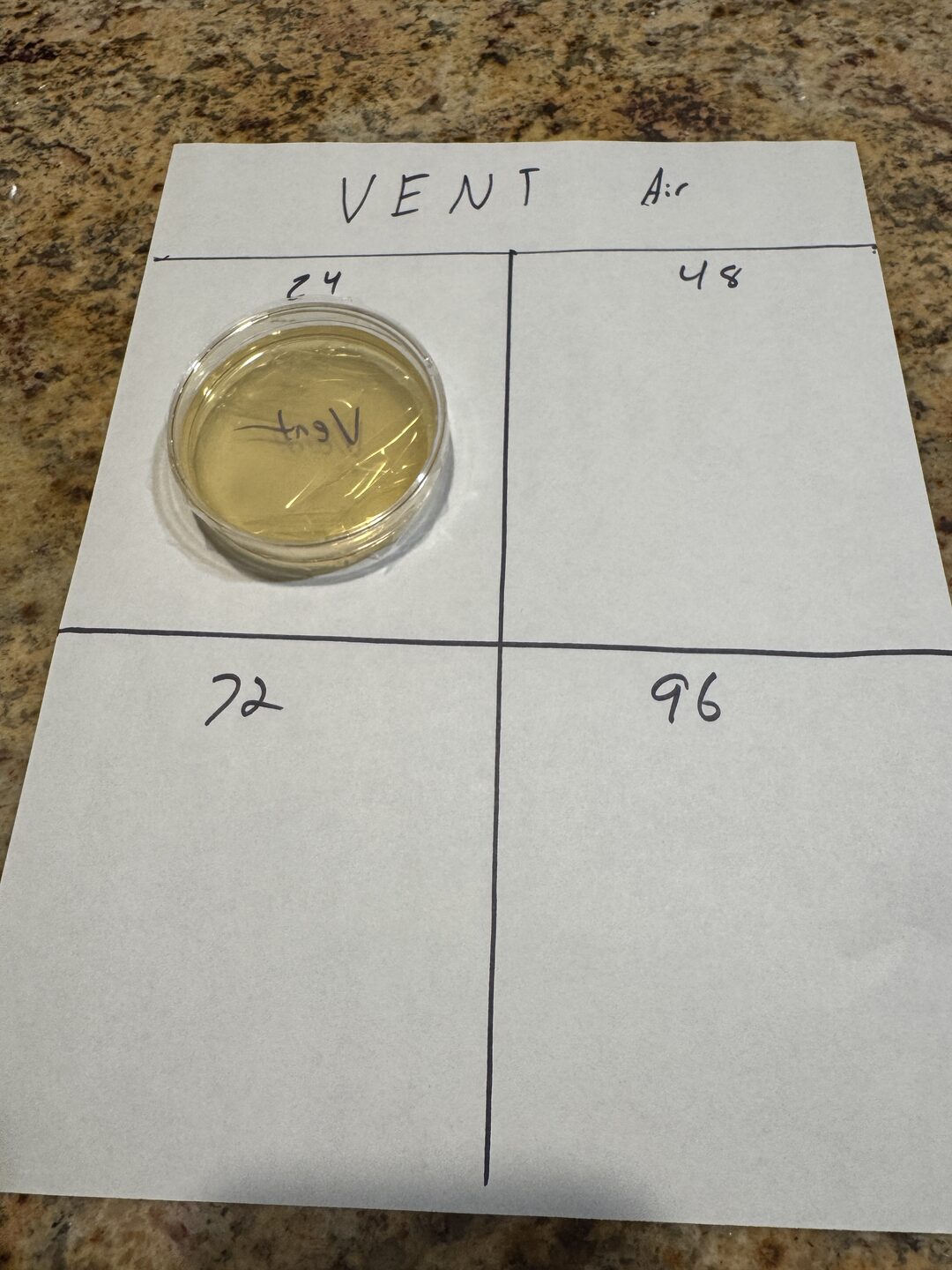
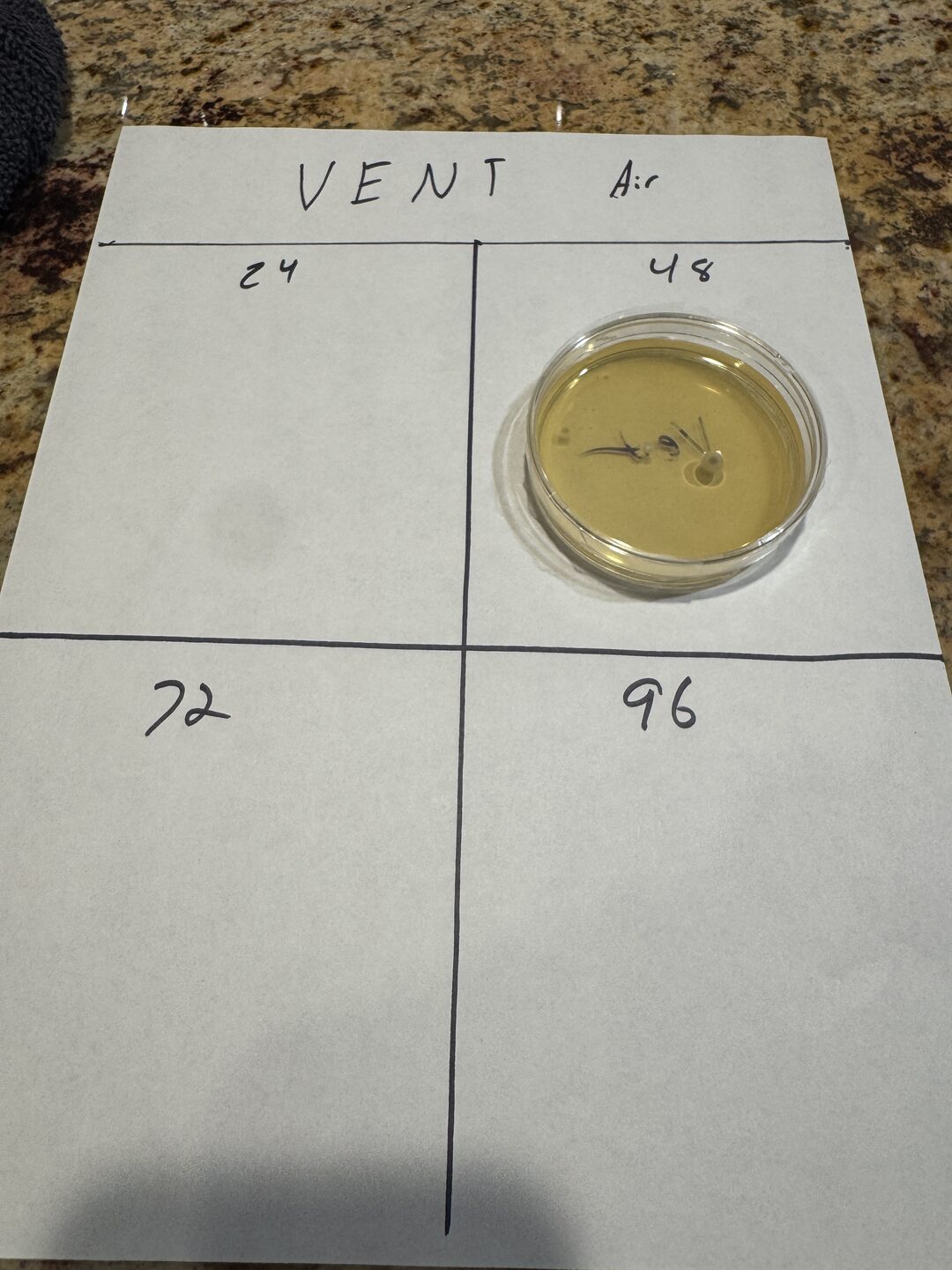
Each plate was photographed at roughly 24, 48, 72 and 96 hours on a marked card.
What happened, day by day
24 hours — nothing. All four plates clear. If you read your kit at a day and stopped, you would conclude your house was clean.
48 hours — the first colonies. A few small discrete spots on the vent air plate. A couple of pale patches outdoors. Still nothing you would call a result.
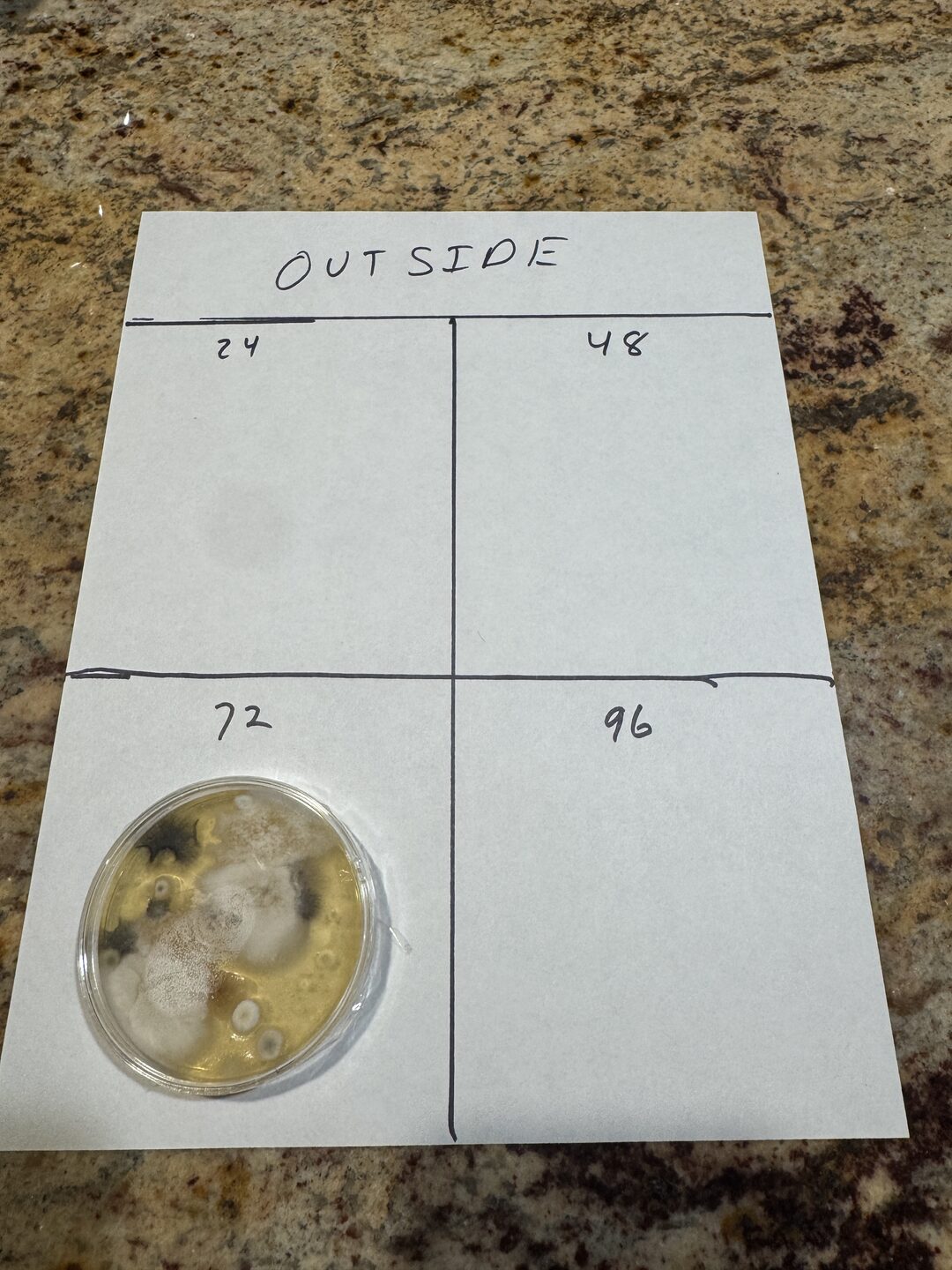
72 hours — separation. Now they are clearly different. Outdoors is heavily grown with several visibly different species. The swab plate has one large fuzzy colony spreading across it. Indoor air and vent air have under ten discrete colonies each, on otherwise clear medium.
96 hours — no contest. The outdoor plate is unrecognisable: dozens of colonies, at least six different species, green, grey, white and orange, almost no clear medium left. The swab plate is dominated by one large grey sporulating colony. Indoor air and vent air are still countable — eight colonies or fewer, clear medium between them.
The result
The outdoor plate grew the most, by a wide margin, at every reading after 48 hours.
Read that again with a kit in your hand. If you set a plate in your living room and found eight colonies on it, you would call somebody. The same plate on the porch grew fifty and nobody thinks the outdoors needs remediation.
That is what a kit cannot give you: a number to compare against. Mold is in outdoor air everywhere, all the time, and it comes into every building through every door and window. A positive result is not a finding. It is the expected outcome.
The EPA puts the same thing a different way: "Standards or Threshold Limit Values (TLVs) for airborne concentrations of mold, or mold spores, have not been set." There is nothing to compare your plate to. Not informally — legally, there is no number.
Managing a mold problem is not the same as fixing one
This house is being held in a good condition, and the indoor plates show it. But nothing has been remediated. The spores are still in the house — in the ductwork, on surfaces, in the dust, distributed by the air conditioner over however long the house was wet. You are never getting all of them out of a building, and nobody should tell you otherwise.
What has changed is the water. Dry them out and they go dormant, and dormant looks exactly like solved.
It is not solved. It is paused. One water event, or one stretch where the humidity control slips, and it starts again — and because it was distributed everywhere, it starts in several places at once rather than in the one spot it began.
That is why the moisture is the fix, and the plate is not even the diagnosis.
What the four methods actually told us
They were not equivalent, and the differences are the useful part.
The swab grew far more than the air near it. Same vent, two methods, very different plates. A swab moves material that is already on a surface; an air plate waits for something to land on it. A swab tells you about a surface and an air plate tells you about air, and neither answers the other question.
Vent air and room air came out similar. Both low, in a house being held under 50% humidity with purifiers running.
Outdoors buried all of them. Which is the whole point.
The swab plate is the interesting one
The growth on that grille had been sitting on a dry surface in a dry house for a long time. Nothing was happening to it. Then it was scraped off onto a medium that holds moisture, and within a day it was growing.
That is the thing about drying mold out: it does not kill it, it makes it dormant. Dormant is not gone. It is waiting.
We cannot tell you whether what came off that grille was dormant or already active — you cannot tell by looking. What we can tell you is that it did nothing on a dry grille and took off within twenty-four hours of finding water, on exactly the timeline the literature gives for growth after wetting.
If you want the mechanism behind that, it is the whole subject of another page:
How mold spreads through a house
What this test does not prove
Worth saying plainly, because the rest of the internet is not careful about this.
We did not run a sealed control plate, so we cannot rule out that something was on the medium before it was opened. We tested one house — a dry, managed, purified one — so nothing here says what a plate does in a house with an active moisture problem. And four plates is a demonstration, not a study.
What it does show is what a homeowner following the instructions would actually see — and that the outdoor comparison, which almost no kit tells you to run, changes the answer completely.
So are the kits worthless?
Not worthless. Misleading, in the way they are usually used.
What a plate can tell you: that something is growing on a surface, if you swab it. That is genuinely useful, and the swab plate here was the most informative of the four.
What it cannot tell you: how much, compared to what, whether it is a problem, where the moisture is, or what to do about it. And those are the only questions that matter.
The one thing that would improve any home test is the thing we did: run an outdoor plate at the same time. Without it, a result is a number with nothing beside it.
What actually answers the question
Moisture. Every time.
Mold needs water, and water is measurable in a way that spores in the air are not. A meter on a wall tells you more about whether you have a problem than any plate will, because it finds the cause rather than confirming the symptom.
The EPA says the same about visible growth: "In most cases, if visible mold growth is present, sampling is unnecessary." If you can see it, you already have your result.
How to tell if there is mold behind drywall How mold spreads through a house
Common questions
How accurate are home mold test kits?
The plate does what it is supposed to — things grow on it. The problem is not accuracy, it is interpretation. Without an outdoor plate run at the same time there is nothing to compare your result against, and every plate grows something.
What is the most accurate way to test for mold?
Depends what you are asking. To identify what is growing on a surface, a sample analyzed by a laboratory. To find out whether you have a moisture problem, a moisture meter and a look at the building. Testing and remediation are separate jobs done by separate companies.
My kit came back positive. Do I have a mold problem?
It tells you spores were in the air or on the surface, which was already true. Whether you have a problem depends on whether there is active growth and where the water is coming from — neither of which a plate can answer.
Test run 14–18 September 2026, South Louisiana. No brand named — the point is the method, not the product.
Sources: EPA — Mold testing or sampling · EPA — A Brief Guide to Mold, Moisture and Your Home.
Current as of September 2026.